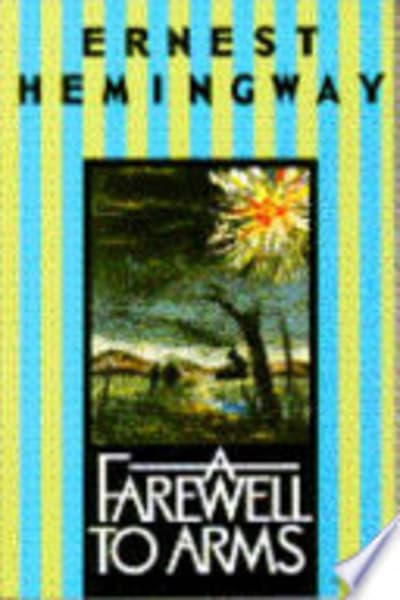
A farewell to arms — Book Summary & Review
Last updated:
Public domain via Project Gutenberg — free and legal.
A farewell to arms Summary
In A Farewell to Arms, Hemingway organizes the novel around a stark contrast between Henry’s military routine and the private “system” he builds with Catherine Barkley, a pattern that keeps snapping back to the same question: what do you do when the war keeps editing your life? The book’s middle section—where Henry moves through hospitals and leave, then watches the machinery of retreat grind on—feels less like a romance plot and more like a running argument about control: you can choose love, but you can’t choose the weather of history. Hemingway’s use of recurring motifs (cigarettes, rivers, the repeated language of exhaustion) gives the relationship a grim structure, so every tender moment has the aftertaste of collapse. One concrete example: the novel’s long stretch of ambulance and hospital scenes turns sympathy into logistics; even care feels scheduled, temporary, and vulnerable to orders. Another example comes when Henry and Catherine try to convert feeling into a future—Hemingway makes the plan sound almost practical—then war interrupts with the same blunt force it uses everywhere else. Hemingway’s last name becomes less a brand here and more a method: he trims sentiment until it’s either action or silence, and he lets the consequences do the emotional heavy lifting.
Still, the limitation is real. If you want a fully panoramic war novel with many viewpoints, you’ll likely feel boxed in—Henry’s focus narrows the war’s scope, and the book refuses to “explain” history beyond what Henry can see. You also need to tolerate Hemingway’s spare, sometimes chilly style; if you crave lyrical interiority, this will frustrate you more than it satisfies you.
Key Takeaways from A farewell to arms
-
1
Henry’s “system” with Catherine means love is treated like a daily practice, not a mood, and war keeps breaking the schedule.
-
2
Trench logic in Henry’s narration turns heroism into procedure, so courage looks like endurance rather than speeches or strategy.
-
3
Hospital scenes operate as emotional checkpoints, showing how care is real yet temporary under military bureaucracy.
-
4
Retreat and displacement function as narrative pressure, forcing characters to improvise while the larger machine decides outcomes.
-
5
Hemingway’s clipped style treats feeling as consequence, so you infer emotion from decisions, pauses, and repeated objects.
Who Should Read This
If you’re tired of war fiction that treats battles as the whole point and you want a story where the real damage is logistical and personal, read this. Someone who’s coping with a life plan being constantly disrupted—by work, illness, or instability—will recognize Henry’s helpless, stubborn bargaining with reality.
Who Shouldn't Read This
If you want a multi-perspective “big canvas” of World War I politics and tactics, this book will feel frustratingly narrow because it stays locked to Henry’s limited view. If you need lush psychological narration to feel invested, Hemingway’s restraint will likely leave you cold instead of comforted.
Editor's Verdict
The single best thing A Farewell to Arms does is fuse romance with war’s administrative cruelty, especially through the hospital-and-transport sequences that make tenderness compete with orders. The real limitation is that it offers a tightly limited perspective on the conflict, so the wider war often feels like weather rather than lived complexity. This hits hardest for anyone who’s recently realized their “future” can be canceled overnight and wants to see that truth rendered without ornament.
Ready to read A farewell to arms?
Get your copy on Amazon today.
A farewell to arms — Frequently Asked Questions
About Ernest Hemingway
Ernest Hemingway (1899–1961) was an American writer and journalist. He worked as a reporter during World War I, serving in Italy and being wounded, experiences that informed his firsthand depiction of war and its effects. He is credible on this topic because A Farewell to Arms draws directly from his wartime service. Other notable works include The Sun Also Rises and For Whom the Bell Tolls.