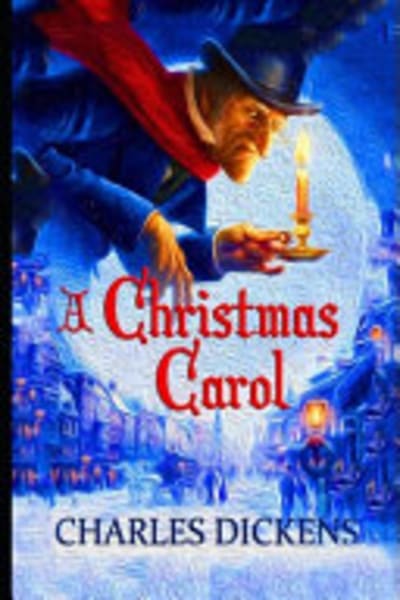
A Christmas Carol in Prose; Being a Ghost Story of Christmas — Book Summary & Review
Last updated:
Public domain via Project Gutenberg — free and legal.
A Christmas Carol in Prose; Being a Ghost Story of Christmas Summary
The novella’s structure—Ebenezer Scrooge being visited by the ghosts of Christmas Past, Christmas Present, and Christmas Yet to Come—turns A Christmas Carol into a sequence of moral inspections, not a plot puzzle. Dickens opens by staking everything on Scrooge’s habits: his cold arithmetic, his refusal to charity, and the way he treats kindness like a financial mistake. Then Marley’s appearance doesn’t merely warn; it frames Scrooge’s future as an extension of his current bookkeeping. When the Ghost of Christmas Past arrives, Dickens makes the past feel tactile through specific scenes of Scrooge’s earlier choices—especially the slow, humiliating way bitterness takes root. The Ghost of Christmas Present is where the story gets sharper and more social: Scrooge watches ordinary people, including the warm chaos around the Cratchits, and he’s forced to confront what his “rational” stinginess costs real families.
The third visit, Christmas Yet to Come, is the most frightening because it’s not supernatural spectacle—it’s consequence. Dickens stages the horror through ordinary reactions to death and through Scrooge’s own dawning recognition that he’s been living as if he’s untouchable. Scrooge’s final pivot feels earned because Dickens has shown the same man from three angles: what he chose, what he ignores, and what he will face. If you’ve ever sworn you can’t change, Dickens quietly argues the opposite: change is a deadline, not a vibe.
Honest limitation: this is a short, old-school sermon wrapped in story, so if you want psychological realism, modern dialogue, or a sprawling cast, you’ll find the emotional mechanics a bit blunt. Also, the 2017 “first published” detail is misleading—Dickens’s original publication is 1843.
Key Takeaways from A Christmas Carol in Prose; Being a Ghost Story of Christmas
-
1
Ebenezer Scrooge’s “cold arithmetic” shows how thrift becomes cruelty when it ignores people’s actual lives and needs.
-
2
Jacob Marley’s ghost functions as a cause-and-effect ledger for Scrooge, making punishment feel like a continuation of choices.
-
3
Ghost of Christmas Past forces Scrooge to rewatch formative decisions, turning memory into moral evidence, not nostalgia.
-
4
Ghost of Christmas Present uses the Cratchits’ household warmth to prove that charity is measurable in human time and dignity.
-
5
Ghost of Christmas Yet to Come makes the future concrete through social reactions, pushing Scrooge to fear consequences more than magic.
Who Should Read This
If you’re stuck in a “why bother” mood—working hard, feeling numb, and quietly resentful—Someone who needs a moral reset will feel Scrooge’s pressure right away. If you’re heading into a holiday with family tension or burnout, this novella gives you a blunt, readable way to think about change before it’s too late.
Who Shouldn't Read This
If you dislike overt moral messaging and want subtle ambiguity, Dickens will feel like he’s pointing the flashlight directly at your conscience. If you’re looking for a long novel with complex character backstories, the tight, 120-page format will frustrate you with its speed and repeated emotional beats.
Editor's Verdict
The single best thing Dickens does is weaponize the three-ghost sequence so Past, Present, and Yet to Come act like escalating courtroom exhibits for Scrooge’s behavior. The real limitation is that the story is structured as a moral lecture wrapped in fantasy, so it offers little interest in psychological realism or ambiguity. If you’re anyone mid-season, feeling your patience run out and wondering whether your habits can still shift, this hits hardest the moment Scrooge realizes the future mirrors his present.
Ready to read A Christmas Carol in Prose; Being a Ghost Story of Christmas?
Get your copy on Amazon today.
A Christmas Carol in Prose; Being a Ghost Story of Christmas — Frequently Asked Questions
About Charles Dickens
Charles Dickens (1812–1870) was an English novelist and social critic. He was born in Portsmouth, raised in poverty after his father’s imprisonment, and worked in a factory as a teenager—experiences that shaped his writing about hardship and reform. He is credible on Christmas themes because his works repeatedly address Victorian morality and charity, including A Christmas Carol (1843). Other notable works include Oliver Twist (1837–39) and Great Expectations (1860–61).