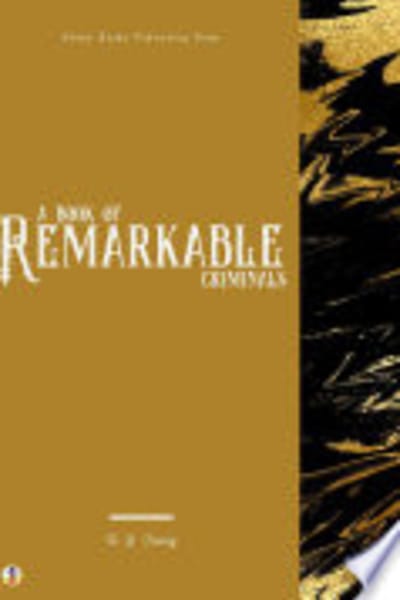
A Book of Remarkable Criminals — Book Summary & Review
by H. B. (Henry Brodribb) Irving
Last updated:
Public domain via Project Gutenberg — free and legal.
A Book of Remarkable Criminals Summary
In A Book of Remarkable Criminals, H. B. (Henry Brodribb) Irving builds the book as a set of concise criminal biographies that treat each subject like a case file—crime, temperament, and consequence—rather than a single continuous narrative. The structure matters: Irving keeps returning to the same grim triad of motive, opportunity, and self-deception, and you feel it most in the way each sketch ends by circling back to how the person rationalized their own behavior. One of the most memorable sections is “The Notorious Forgers,” where Irving lays out a pattern of credential fraud that’s almost boring in its method—until you remember these were real people who exploited trust for years. Another standout is the treatment of “The Murderers,” where he doesn’t linger on gore so much as on the administrative aftermath: arrests, testimony, and the casual way communities kept functioning while the truth was hidden in plain sight.
Irving’s voice is confident and occasionally gleeful about its subject matter, and that’s part of the book’s charm and problem. He writes as if the reader is an armchair investigator, and he supplies just enough context to make the crimes feel explainable without ever softening them. Still, the book’s biggest strength is its consistency: Irving uses the same evaluative lens across different types of criminals, so the collection reads like a practical taxonomy of wrongdoing. If you want a modern, psychologically deep “why,” Irving isn’t that writer; he’s more interested in the observable arc from delusion to damage.
The limitation is real: this is not a systematic history of crime, and it doesn’t provide modern criminology, courtroom transcripts, or even a balanced moral framework. It will frustrate readers who want either scholarly sourcing or sensitivity toward victims, because the tone is built for sensational curiosity, not careful rehabilitation.
Key Takeaways from A Book of Remarkable Criminals
-
1
Criminal Biographies as Case Files: Irving organizes each figure like a mini dossier—motive, method, and aftermath—so you compare patterns across cases.
-
2
Motive, Opportunity, Self-Deception: This triad recurs in sketch after sketch, explaining how people talk themselves into wrongdoing.
-
3
Irving’s Taxonomy of Wrongdoing: The collection groups criminals by type (forgers, murderers, and more), turning a pile of stories into a crude system.
-
4
Aftermath Over Atmosphere: Irving spends more time on arrest and testimony than on lurid scene-setting, keeping focus on consequences.
-
5
Armchair Investigator Tone: The narrator invites you to judge from a distance, which makes the book fun for some and ethically uncomfortable for others.
Who Should Read This
Someone who keeps getting pulled into old-fashioned true-crime collections and wants short, structured biographies instead of long investigative reporting will probably enjoy Irving’s approach. If you’re the kind of reader who likes comparing patterns—fraud styles versus violent crimes—between entries, this will scratch that itch.
Who Shouldn't Read This
If you need modern sourcing, courtroom-level documentation, or a psychologically nuanced explanation of behavior, Irving will feel thin and dated. If you’re sensitive to victim-centered storytelling and prefer restraint over sensational tone, the book’s breezy relish will bother you.
Editor's Verdict
The single best thing Irving does is keep returning to his recurring triad—motive, opportunity, and self-deception—so sections like “The Notorious Forgers” feel like variations on a theme rather than disconnected gossip. The real limitation is that Irving offers no modern evidence standard or victim-focused ethics, so you’re left with story-shaped judgment instead of careful scholarship. This hits hardest for anyone who reads crime history for patterns and moral taxonomy, especially when you’re tired of contemporary documentaries that over-explain.
Ready to read A Book of Remarkable Criminals?
Get your copy on Amazon today.
A Book of Remarkable Criminals — Frequently Asked Questions
About H. B. (Henry Brodribb) Irving
H. B. (Henry Brodribb) Irving was a British writer and journalist in the late 19th and early 20th centuries. He wrote about crime and public scandals, drawing on reporting and contemporary court coverage, which made him credible on criminal history and notable offenders. He is best known for A Book of Remarkable Criminals. Other notable works include A Book of Remarkable Trials and A Book of Remarkable Murders.