Tuck Everlasting — Book Summary & Review
Last updated:
Tuck Everlasting Summary
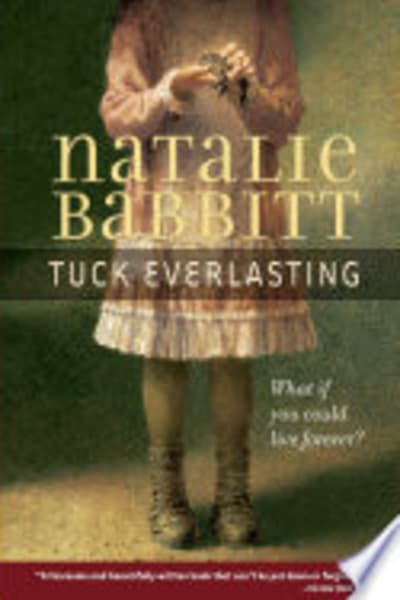
Tuck Everlasting opens with the discovery of a mysterious spring by a young girl named Winnie Foster, a pivotal moment that sets the stage for Natalie Babbitt’s exploration of immortality. The narrative unfolds primarily in the forest surrounding the Tuck family's hidden abode, where Winnie encounters the family cursed with eternal life. The chapter 'The Spring' details the fateful encounter and acts as a catalyst for Winnie’s internal conflict between the allure of immortality and the natural process of life. Babbitt’s prose captures the tension between the carefree allure of living forever and the profound responsibility it entails. However, the book does not delve deeply into the broader philosophical implications of immortality, focusing instead on a more personal narrative. Readers seeking a comprehensive examination of immortality’s ethical dilemmas may find this approach lacking, as the story remains firmly grounded in its fantasy roots and the personal growth of its young protagonist.
Key Takeaways from Tuck Everlasting
-
1
The Spring: Serves as the central symbol of eternal life, illustrating both temptation and the burden of immortality.
-
2
Angus Tuck's Boat Analogy: Represents life's natural cycle, comparing life to a stream that should flow naturally, not stagnate.
-
3
The Wheel of Life: A metaphor for life's natural progression, emphasizing the importance of accepting mortality.
-
4
Winnie's Choice: Highlights personal growth through her decision about whether to drink from the spring, defining her character arc.
-
5
The Yellow Suit: Symbolizes the intrusion of greed and exploitation into the peaceful world of the Tucks and Winnie.
Who Should Read This
If you find yourself grappling with the concept of mortality, this book offers a gentle introduction through a fantasy lens. Someone who enjoys reflective tales with a focus on personal growth and family dynamics will appreciate it.
Who Shouldn't Read This
Those seeking a detailed philosophical exploration of immortality’s consequences will be disappointed. Readers expecting fast-paced action or complex world-building might find the narrative too simple and the setting limited.
Editor's Verdict
The best aspect of Tuck Everlasting is its ability to weave a poignant story around Winnie’s moral dilemma, particularly in the chapter 'The Spring'. Its limitation lies in its narrow focus, as it doesn't explore immortality's broader societal impacts. This book resonates most when contemplating life’s fleeting nature, particularly during moments of personal reflection or life transitions.
Ready to read Tuck Everlasting?
Get your copy on Amazon today.
Tuck Everlasting — Frequently Asked Questions
About Natalie Babbitt
Natalie Babbitt (1932-2016) was an American author and illustrator known for her contributions to children's literature. Born in Dayton, Ohio, she studied at Smith College. Babbitt gained credibility through her imaginative storytelling and timeless themes, exemplified in her acclaimed novel "Tuck Everlasting" (1975), which explores immortality. Her background in art and literature enriched her narrative style. Other notable works include "The Search for Delicious" (1969) and "Kneeknock Rise" (1970), a Newbery Honor book.