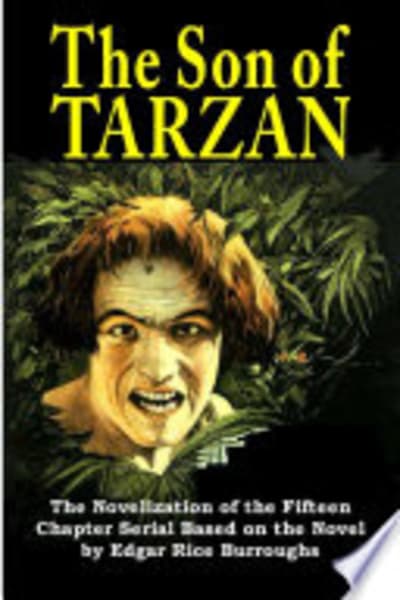
The Son of Tarzan — Book Summary & Review
Last updated:
Public domain via Project Gutenberg — free and legal.
The Son of Tarzan Summary
In The Son of Tarzan, Edgar Rice Burroughs keeps the story’s engine simple: revenge drives Paulvitch, and the plot’s cruelty comes from how he weaponizes Tarzan’s own family. The book opens with Paulvitch still fixated on vengeance, then escalates by luring Tarzan’s young son away from London—an act that sounds like a kidnapping until you realize it’s also a test of what “civilized” life can survive. The boy escapes, aided by Akut, and the jungle becomes both classroom and courtroom. Burroughs doesn’t waste time on sentimental adjustment; the child has to learn movement, fear-management, and dominance the way Tarzan learned it—through exposure, injury, and gradual competence.
Once the boy grows into Korak the Killer, the story shifts from survival to identity. Korak’s competence is framed as natural law: he’s built for the same dangers his father conquered, and Burroughs makes the contrast with his earlier “civilized boy” status feel like a deliberate insult to London’s assumptions. Then Meriem enters, rescued from a raiding Arab band, and the book widens from animal threats to human ones. That’s where Burroughs turns the screws: the jungle can kill you, but men design systems to hurt you on purpose. Korak’s arc lands in the uncomfortable space where strength isn’t the problem—intent is.
A limitation: The Son of Tarzan doesn’t aim for psychological realism or morally ambiguous plotting; it’s built for momentum, spectacle, and clear winners. If you want modern pacing, nuanced character interiority, or careful handling of colonial-era stereotypes, Burroughs will frustrate you long before the final act.
Key Takeaways from The Son of Tarzan
-
1
Paulvitch’s revenge plot means every kidnapping choice has a cost, and Burroughs shows the “civilized” world paying first.
-
2
Akut functions as more than a helper; the ape companionship is the hinge that turns escape into a new upbringing.
-
3
Korak the Killer is staged as Tarzan’s skills plus a different emotional wiring, so competence becomes identity.
-
4
Meriem’s rescue from a raiding Arab band widens the danger map from animals to human cruelty.
-
5
The London vs. jungle contrast treats “civilization” as fragile performance, not stable character formation.
Who Should Read This
Someone who’s craving classic, no-frills action-adventure—where survival rules are learned by doing—will probably enjoy Korak’s jungle education. If you’re tired of modern thrillers that talk more than they swing, Burroughs gives you momentum and brute stakes from page one.
Who Shouldn't Read This
If you need morally nuanced characters and careful, non-stereotyped depiction of cultures, The Son of Tarzan will feel dated and irritating. If you prefer slow-burn character psychology over physical peril and clear plot turns, Burroughs’ structure will feel thin and blunt.
Editor's Verdict
The single best thing Burroughs does here is convert Paulvitch’s revenge into a literal upbringing test, with Akut’s help and the London-to-jungle switch doing most of the storytelling heavy lifting. The real limitation is that the novel prioritizes spectacle and straightforward moral framing over psychological depth, so character interiors rarely surprise. This will hit hardest for anyone who loved Tarzan as a kid and wants that same rough-and-ready adventure energy back today.
Ready to read The Son of Tarzan?
Get your copy on Amazon today.
The Son of Tarzan — Frequently Asked Questions
About Edgar Rice Burroughs
Edgar Rice Burroughs (1875–1950) was an American author born in Chicago, Illinois. He worked in various jobs—including ranching and mining—before turning to fiction. He is credible on The Son of Tarzan’s topic because he created the Tarzan character and wrote the Tarzan series, including The Son of Tarzan (1939). Other notable works include Tarzan of the Apes (1912) and the John Carter novel series, beginning with A Princess of Mars (1912).