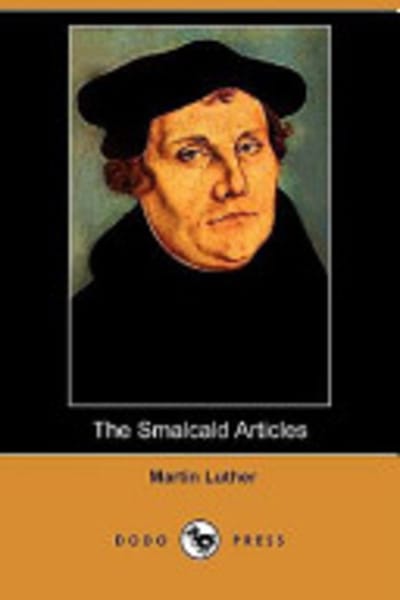
The Smalcald Articles — Book Summary & Review
Last updated:
Public domain via Project Gutenberg — free and legal.
The Smalcald Articles Summary
In The Smalcald Articles, Luther organizes Reformation doctrine into tightly argued “articles,” and the book’s most recognizable framework is how he treats the church’s core teachings as non-negotiable points to be defended. The text is short, but it feels designed to be used: Luther lays out what must stand—especially the gospel promise centered on Christ—and he separates essentials from debates he considers secondary. A key section is the portion commonly associated with “Of the First and Chief Article,” where Luther insists that the justification of sinners through Christ is the foundation, not an accessory to church life. He keeps returning to the same pressure point: if the church’s teaching about grace and faith gets bent, everything else becomes unstable.
Luther’s method is blunt and practical. He writes as someone preparing for conflict, laying down doctrinal claims with the expectation that opponents will contest them. He also treats certain controversies as symptoms of a deeper problem with authority and the gospel—so the argument keeps snapping back to Scripture, conscience, and what Luther believes the church must confess. Even when you disagree with Luther’s conclusions, you can see the logic he’s building: doctrine isn’t “ideas for later,” it’s the map that tells people how to be right with God.
Honest limitation: this isn’t a narrative or character-driven work, and it won’t reward readers who want historical context, smooth translation into modern language, or a balanced survey of Catholic answers. If you’re looking for a readable “overview,” you may find The Smalcald Articles repetitive, polemical, and demanding—more like a doctrinal brief than a conversation.
Key Takeaways from The Smalcald Articles
-
1
Smalcald Articles structure: Luther presents doctrine as numbered “articles,” prioritizing essentials over secondary disputes for clarity under pressure.
-
2
First and Chief Article: Luther anchors the whole confession in Christ’s work and justification, treating it as the test for everything else.
-
3
Justification by faith: Luther argues faith receives God’s promise, not merit, and that this claim controls how the church teaches.
-
4
Scripture as authority: Luther repeatedly uses biblical grounding to challenge church claims, insisting Scripture must govern doctrine and confession.
-
5
Church reform through confession: Luther’s goal is a public doctrinal settlement, where what the church confesses shapes worship and ethics.
Who Should Read This
Someone who’s trying to understand why the Reformation became doctrinally intense—rather than merely political—should read Luther’s Smalcald Articles. If you’re wrestling with what “the gospel” means in plain terms and why Luther treats justification as the center, this will feel relevant fast.
Who Shouldn't Read This
If you want a calm, even-handed religious history with footnoted neutrality, you’ll be frustrated by Luther’s combative tone and narrow focus. If you’re expecting a modern-style essay that explains itself gently, Luther’s compressed article format will feel like homework without much cushioning.
Editor's Verdict
The single best thing The Smalcald Articles does is make Luther’s doctrinal priorities unmistakable, especially through the way he frames the “First and Chief Article” around justification as the governing center. The real limitation is that it offers little patience for readers who want context, narration, or a fair back-and-forth with opposing arguments. This hits hardest for someone newly curious about Reformation theology right after reading a popular history and realizing they need to see the actual doctrinal stakes Luther cared about.
Ready to read The Smalcald Articles?
Get your copy on Amazon today.
The Smalcald Articles — Frequently Asked Questions
About Martin Luther
Martin Luther (1483–1546) was a German theologian and leader of the Protestant Reformation. Educated at the University of Erfurt and trained as an Augustinian monk, he became credible on doctrinal disputes through his extensive study of Scripture and his role in major Reformation controversies. He authored The Smalcald Articles (1537) as a concise statement of Lutheran doctrine. Other notable works include the Ninety-Five Theses (1517) and On the Freedom of a Christian (1520).