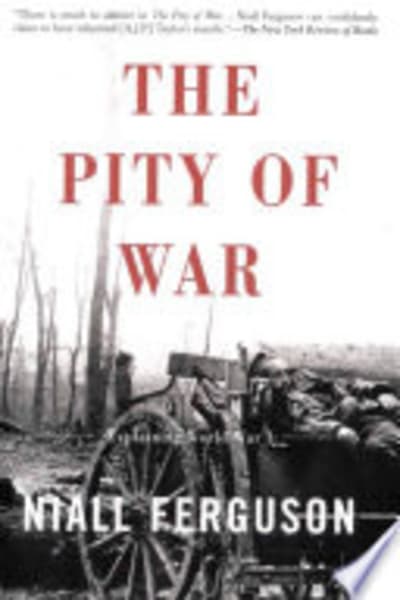
The Pity of War — Book Summary & Review
Last updated:
The Pity of War Summary
Ferguson's *The Pity of War* kicks off by challenging the inevitability of the First World War, positing that Britain's actions, not just broader geopolitical tensions, escalated the conflict to a global scale. The book is structured around key questions, such as those explored in 'The Myths of Militarism', where Ferguson scrutinizes the economic and military misconceptions that contributed to the war's outbreak and continuation. He compellingly argues that Britain’s economic missteps and military weaknesses undermined its position and invited American involvement, reshaping the 20th-century power landscape. Ferguson's narrative style, combining vivid anecdotes with rigorous analysis, makes complex historical arguments accessible. However, those seeking a comprehensive exploration of the social impacts of WWI might find it lacking. The book focuses primarily on economic and military dimensions, leaving social aspects underexplored, which might frustrate readers interested in a more holistic view of the war’s effects.
Key Takeaways from The Pity of War
-
1
The Myth of Military Incompetence: Ferguson argues that British military leaders weren't as inept as often portrayed; they faced insurmountable challenges.
-
2
The German Strategy: He explains how Germany's tactical brilliance paradoxically led them to a strategic dead-end, ultimately causing their defeat.
-
3
Economic Mismanagement: Ferguson shows how Britain's poor fiscal decisions before and during the war weakened its economic standing.
-
4
The American Influence: The book details how U.S. involvement, prompted by British missteps, shifted the war’s outcome and global power dynamics.
-
5
Counterfactuals: Ferguson uses hypothetical scenarios to explore alternative outcomes, challenging readers to rethink historical inevitabilities.
Who Should Read This
Someone who questions the traditional narratives surrounding the First World War and wants to explore alternative perspectives. If you're intrigued by economic and political analysis of historical events, this book is for you.
Who Shouldn't Read This
If you're looking for an in-depth analysis of the social and cultural impacts of World War I, you'll be disappointed. The book's focus is narrowly on military and economic factors, leaving out broader societal implications.
Editor's Verdict
Ferguson excels in debunking myths with his analysis in 'The Myths of Militarism'. However, his focus is heavily skewed towards economics and military strategy, ignoring social dimensions. If you're grappling with conventional historical narratives and seek a fresh perspective, this book will resonate deeply.
Ready to read The Pity of War?
Get your copy on Amazon today.
The Pity of War — Frequently Asked Questions
About Niall Ferguson
Niall Ferguson, born April 18, 1964, in Glasgow, Scotland, is a renowned historian and author. He is a Senior Fellow at the Hoover Institution, Stanford University, and a Senior Faculty Fellow at the Belfer Center for Science and International Affairs, Harvard. Ferguson's credibility on the topic of war stems from his extensive research and academic background in history. Besides "The Pity of War," he authored "Empire: How Britain Made the Modern World" and "The Ascent of Money."