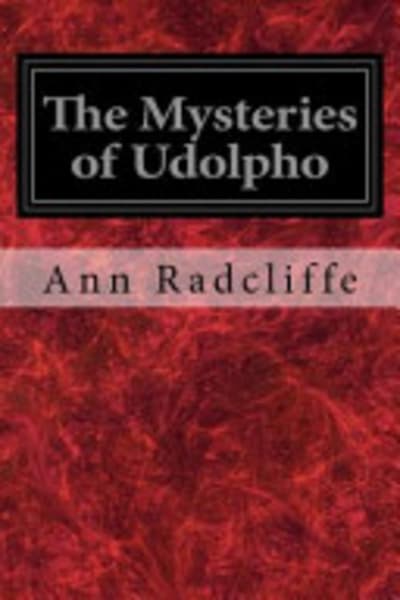
The Mysteries of Udolpho — Book Summary & Review
Last updated:
Public domain via Project Gutenberg — free and legal.
The Mysteries of Udolpho Summary
In The Mysteries of Udolpho, Radcliffe organizes dread through a recurring pattern of “terror” and “suspense,” where Emily St. Aubert’s grief keeps getting translated into weather, architecture, and bodily weakness rather than straightforward plot twists. The novel opens with Emily’s father dying and the household destabilizing, then Radcliffe steadily tightens the screws: deaths, illnesses, and a creeping sense that inheritance and guardianship are less “family protection” than a slow-motion trap. Emily’s perspective matters because Radcliffe uses her as a measuring device—when her mind falters, the surrounding landscape seems to sharpen into threat.
A concrete example: the book’s castle-and-corridor episodes repeatedly stage fear as an interpretive problem. Characters see shadows, hear strange sounds, and then argue over what those signs “mean,” and Radcliffe keeps revisiting that gap between evidence and imagination. Another example comes from the way the Alps are framed: the scenery is not decorative; it functions like a psychological pressure chamber, turning distance into dread and travel into exposure. Radcliffe also leans hard on the machinery of Gothic property—wardship, succession, and control of a young woman’s movement—so the supernatural atmosphere is always braided with social power.
Still, Radcliffe does not do what modern suspense novels do: it doesn’t prioritize fast pacing or clear answers. If you want sustained action, frequent payoff, or an ending that cleanly resolves every question, you may feel stalled by the novel’s prolonged mood-work and extended descriptions. Radcliffe’s technique is the point, and if you’re not in the mood for that kind of pressure-cooker fiction, The Mysteries of Udolpho will frustrate you.
Key Takeaways from The Mysteries of Udolpho
-
1
Terror and Suspense: Radcliffe builds fear by staging uncertainty—what you can’t verify becomes the engine of dread.
-
2
Emily St. Aubert’s Grief: Emily’s emotional collapse is mirrored in setting and bodily symptoms, so psychology drives the “Gothic” effect.
-
3
Wardship and Succession: Guardianship isn’t background; it’s the legal mechanism that converts vulnerability into confinement.
-
4
Udolpho’s Architecture: Corridors, rooms, and hidden spaces function like arguments—space forces readers to interpret threat.
-
5
The Alps as Pressure Chamber: Radcliffe uses landscape scale to turn travel and nature into psychological suffocation.
Who Should Read This
If you’re reading with a low tolerance for modern pacing and you want atmosphere that feels like it’s pressing on your chest, this fits. Someone who’s dealing with grief, family instability, or powerlessness will recognize how Radcliffe weaponizes dependence into fear.
Who Shouldn't Read This
If you need fast plot escalation and frequent resolutions, you’ll likely find Radcliffe’s extended description and lingering uncertainty exhausting. If you’re allergic to 18th-century prose rhythms and want clean supernatural explanations, this will disappoint you.
Editor's Verdict
The single best thing Radcliffe does is make the Gothic feel structurally coherent by linking “terror” to Emily’s mental state and to property control, which you feel most strongly as wardship tightens and space turns threatening. The real limitation is that the novel stretches suspense through prolonged mood and interpretive ambiguity, so payoff arrives slowly and sometimes incompletely. This hits hardest for anyone who read too many modern thrillers and now wants to be trapped in uncertainty—especially during a quiet evening when you’re willing to let dread simmer.
Ready to read The Mysteries of Udolpho?
Get your copy on Amazon today.
The Mysteries of Udolpho — Frequently Asked Questions
About Ann Ward Radcliffe
Ann Ward Radcliffe (1764–1823) was an English novelist associated with the Gothic literary tradition. She was born in Holborn, London, and published her major works in the late 18th century. She is credible on Gothic mystery and atmosphere because she wrote and refined the genre through multiple widely read novels and established conventions of “explained” supernatural suspense. Her notable works include The Italian (1797) and The Romance of the Forest (1791).