The Liberation Trilogy — Book Summary & Review
Last updated:
The Liberation Trilogy Summary
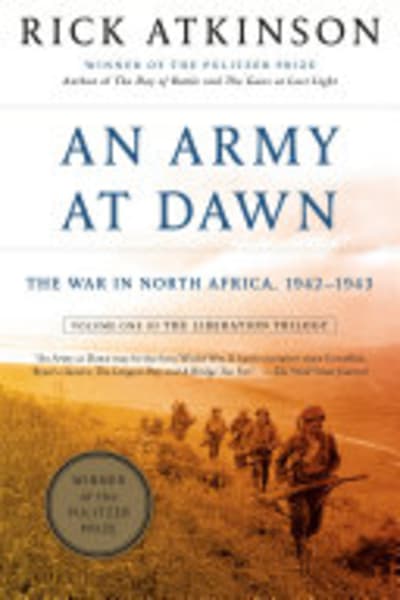
Rick Atkinson kicks off The Liberation Trilogy with a detailed account of Operation Torch, the Allied invasion of North Africa in 1942. Atkinson meticulously documents the logistical challenges and strategic decisions that shaped the campaign, weaving personal anecdotes and military analysis into a cohesive narrative. His chapter on 'The Day of Battle' is particularly striking, offering an intimate look at the soldier's experience amidst the chaotic sands of Tunisia. Throughout the work, Atkinson emphasizes the transformation of the American military from an underprepared force to a world power, achieved through grueling campaigns and evolving tactics. However, those seeking a broader historical perspective may find the book's intense focus on military operations overly narrow, as it doesn't delve deeply into the political or social aspects of World War II. Atkinson's narrative is rich and robust, but it might not satisfy readers looking for a comprehensive overview of the war's global impact.
Key Takeaways from The Liberation Trilogy
-
1
Operation Torch: Atkinson details the ambitious Allied strategy to gain a foothold in North Africa, highlighting its pivotal role in the war.
-
2
Logistical Mastery: The book outlines how overcoming vast supply chain challenges was crucial to Allied success in the North African campaign.
-
3
Training Transformation: Atkinson describes how American troops evolved from inexperienced recruits into battle-hardened soldiers through rigorous training.
-
4
The Day of Battle: This section reveals the brutal realities faced by soldiers during the Tunisian campaign, emphasizing personal sacrifice.
-
5
Strategic Evolution: Atkinson discusses how Allied strategies adapted in response to Axis defenses, showcasing military innovation under pressure.
Who Should Read This
Someone who is fascinated by the nitty-gritty of military strategy and logistics will find this book deeply satisfying. If you're a history buff wanting to understand the tactical shifts during World War II, this is your book.
Who Shouldn't Read This
If you're looking for a broad overview of World War II that includes political and social contexts, this book will disappoint. The focus is squarely on military campaigns, which might be too specialized for some readers.
Editor's Verdict
The book excels in illustrating the transformation of American troops, particularly in the chapter 'The Day of Battle'. Its limitation lies in its intense focus on military detail at the expense of broader historical context. This book is perfect for anyone deeply interested in military history, especially if you're diving into the specifics of World War II campaigns for the first time.
Ready to read The Liberation Trilogy?
Get your copy on Amazon today.
The Liberation Trilogy — Frequently Asked Questions
About Rick Atkinson
Rick Atkinson is an American author and historian, renowned for "The Liberation Trilogy," which chronicles the American role in the liberation of Europe during World War II. A former journalist, Atkinson won Pulitzer Prizes for his work at The Washington Post, enhancing his credibility in historical writing. His meticulous research and compelling narratives are evident in other notable works such as "The Long Gray Line" and "The British Are Coming," the first volume of his Revolutionary War series.