The Illustrated Brief History of Time — Book Summary & Review
Last updated:
The Illustrated Brief History of Time Summary
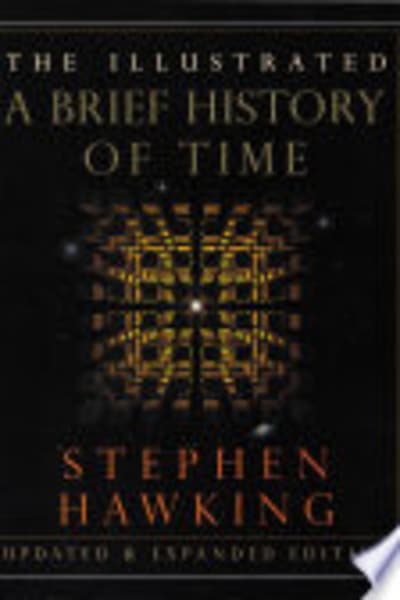
Stephen Hawking's 'The Illustrated Brief History of Time' introduces the concept of wormholes and time travel in a newly added chapter, illustrating the profound possibilities of these cosmic phenomena. The book is structured around updated chapters from the original 'A Brief History of Time', enhanced with over 240 full-color illustrations that elucidate complex ideas like black holes and quantum theory. Hawking's engaging writing style shines through as he explores the intricacies of the universe, making even the most challenging concepts accessible to those without a scientific background. However, those looking for a deep dive into the most recent cosmological advances might find the book's updates insufficient, as it primarily builds on the groundwork laid in the original text. While the illustrations and simplified explanations are helpful, the book doesn't fully satisfy readers seeking cutting-edge scientific insights, given the rapid advancements in cosmology since its last update in 2002.
Key Takeaways from The Illustrated Brief History of Time
-
1
Wormholes: Introduced in a new chapter, these hypothetical tunnels could theoretically allow for time travel, connecting distant parts of space-time.
-
2
Cosmic Background Explorer: Hawking references this satellite to discuss the confirmation of his theories about the early universe's conditions.
-
3
Event Horizon: The boundary around a black hole where nothing escapes, highlighting the mysterious nature of these cosmic entities.
-
4
Hawking Radiation: A theoretical prediction that black holes emit radiation, slowly losing mass and potentially evaporating over time.
-
5
Quantum Fluctuations: Brief, random changes in energy that occur in a vacuum, influencing the universe's large-scale structure.
Who Should Read This
If you're someone fascinated by the mysteries of the universe and enjoy visual aids to better understand scientific concepts, this book is for you. Also, if you're a fan of Stephen Hawking's previous work and want to see how his ideas have evolved, you'll find this edition intriguing.
Who Shouldn't Read This
Someone looking for the latest developments in cosmology will be disappointed, as the updates are not comprehensive enough. If you struggle with scientific terminology or prefer narrative-driven stories, the book's technical nature may not engage you.
Editor's Verdict
The book excels in making complex scientific ideas accessible, particularly through its chapter on wormholes and time travel. However, it falls short of providing the latest cosmological insights, given its last update was in 2002. Best suited for readers who enjoy visual learning and want a foundational understanding of the universe, especially during moments of curiosity about the cosmos.
Ready to read The Illustrated Brief History of Time?
Get your copy on Amazon today.
The Illustrated Brief History of Time — Frequently Asked Questions
About Stephen Hawking
Stephen Hawking was a renowned theoretical physicist and cosmologist, born on January 8, 1942, in Oxford, England. He was a professor at the University of Cambridge and made significant contributions to black hole physics and general relativity. Hawking's credibility stems from his groundbreaking work on singularity theorems and Hawking radiation. In addition to "The Illustrated Brief History of Time," he authored "The Universe in a Nutshell" and "The Grand Design," further establishing his influence in popular science literature.