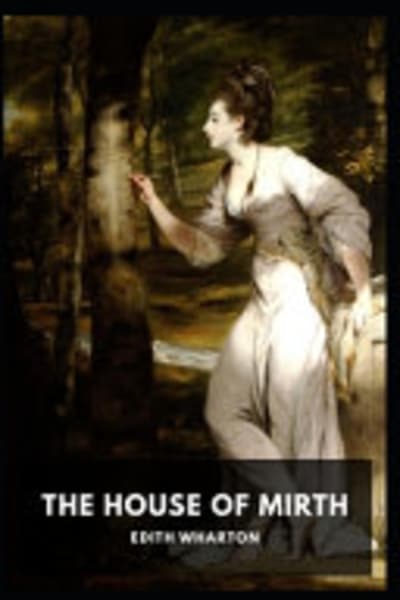
The House of Mirth — Book Summary & Review
Last updated:
Public domain via Project Gutenberg — free and legal.
The House of Mirth Summary
In The House of Mirth, Wharton builds Lily Bart’s downfall around the social arithmetic of “fitness” and “position,” then lets every small failure add up until the ledger can’t be balanced anymore. The book is structured as a slow-motion exposure: Lily starts with enough charm and intelligence to survive early gatherings, yet Wharton keeps tightening the screws by showing how quickly taste becomes a liability when it isn’t matched with money, allies, or strategic compromise. One concrete pivot is Lily’s turn toward Mr. Rosedale’s circle and the way her refusal to treat connections like commodities brands her as unreliable; Wharton is ruthless about the difference between moral sensibility and social usefulness. Another is the long pressure around the marriage market, where every conversation doubles as an audition and every misstep becomes public rumor. Wharton also threads the story through recurring social rituals—visits, calls, charity events, and drawing-room talk—so you can feel how “society” functions like a machine with rules no one admits are rules.
What makes Wharton so sharp is her insistence that Lily’s ethics are not rewarded; they’re merely tolerated until they cost others. Lily’s intelligence doesn’t protect her because the world she inhabits doesn’t pay for intelligence; it pays for leverage. Wharton also makes the class system feel physical: the right clothes, the right tone, the right timing—then the sudden cruelty when she can’t meet the price. Lily Bart isn’t simply punished for being “bad”; she’s punished for being unable to perform the compromises the moment demands.
Limitation: if you want a plot driven by external action—crime, reversals, fast pacing—Wharton’s drama is mostly social, and the book will frustrate readers who want less atmosphere and more external momentum.
Key Takeaways from The House of Mirth
-
1
Lily Bart’s “fitness” is treated like a measurable commodity, and Wharton shows how quickly it collapses when money and alliances fail.
-
2
The marriage market in The House of Mirth functions as public audition, where private feelings matter less than rumor, timing, and sponsorship.
-
3
Social calls and charity events operate as surveillance, turning ordinary politeness into evidence that decides who gets included or erased.
-
4
Lily Bart’s taste is a trap: Wharton frames refinement as costly when it can’t be converted into leverage.
-
5
Wharton’s class critique relies on consequences, not speeches, so every moral choice lands as a social penalty.
Who Should Read This
Someone who feels stuck performing for approval—at work, in a community, or in family expectations—will recognize how Wharton weaponizes “good behavior” into a cage. If you’ve ever watched a friend’s integrity get punished because they wouldn’t play the game, Lily Bart’s spiral will land hard.
Who Shouldn't Read This
If you need fast plot propulsion and frequent external stakes, The House of Mirth will feel like suffocation because the drama is mostly social and procedural. If you want modern-style psychological healing arcs, Wharton offers consequences and exposure more than comfort or redemption.
Editor's Verdict
The single best thing Wharton does is make the social machinery visible through repeated rituals—calls, gatherings, and the marriage-market audition—so Lily Bart’s decline feels inevitable rather than random. The real limitation is that the novel is slow and atmosphere-heavy, with tension generated by manners and rumor instead of action. Anyone who’s recently gotten tired of “self-improvement” narratives will feel the sharpest sting when they realize the world doesn’t reward virtue the way those books promise.
Ready to read The House of Mirth?
Get your copy on Amazon today.
The House of Mirth — Frequently Asked Questions
About Edith Wharton
Edith Wharton (1862–1937) was an American novelist and short-story writer. Born in New York City to a prominent family, she was educated at home and observed upper-class social life firsthand, giving her credibility when writing about wealth, status, and manners. Her novel The House of Mirth (1905) is widely regarded as a sharp critique of the social world she knew. Other notable works include The Age of Innocence (1920) and Ethan Frome (1911).