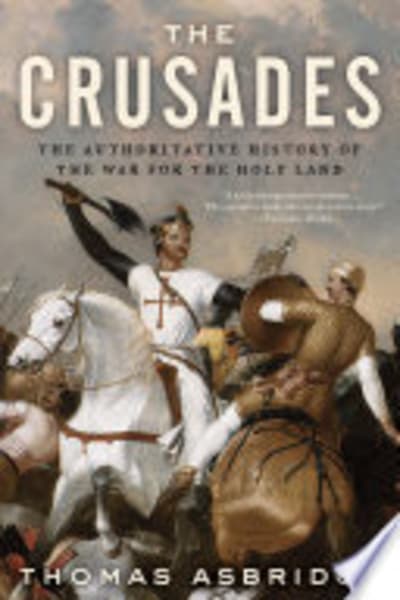
The Crusades — Book Summary & Review
Last updated:
The Crusades Summary
Thomas Asbridge opens 'The Crusades' by exploring the complex motivations behind Pope Urban II's call to arms in 1095, setting the stage for a detailed narrative. The book is meticulously structured, dissecting key events and figures, such as the Battle of Hattin and the reign of Saladin, to illuminate both Christian and Muslim perspectives. Asbridge doesn't shy away from the gritty details, providing vivid accounts of siege warfare and the harsh realities of medieval battles. He successfully conveys the chaos and fervor of the era, particularly in chapters like 'The Fall of Jerusalem'. However, what the book doesn't do is provide much context on the broader medieval world outside of the Crusades, which might leave readers seeking a more comprehensive overview somewhat unsatisfied. Asbridge's scholarly rigor shines, yet his focus remains tightly on the Crusading campaigns themselves, which may frustrate those looking for broader historical context.
Key Takeaways from The Crusades
-
1
Pope Urban II's Call: Asbridge details how the Pope's speech at Clermont galvanized thousands to join the First Crusade.
-
2
The Battle of Hattin: A pivotal clash in 1187 that reshaped the Crusader states, illustrating Saladin's military genius.
-
3
Jihad and Crusade Ideals: Asbridge explains the religious motivations, showing how both sides viewed their wars as divine missions.
-
4
The Reign of Saladin: Analyzes how Saladin's leadership and diplomacy were crucial in reclaiming Jerusalem for Islam.
-
5
Assassins' Role: Describes the mysterious sect's influence in both Christian and Muslim lands, adding intrigue to the narrative.
Who Should Read This
Someone who is deeply interested in the specific strategies and battles of the Crusades, seeking a detailed military history. If you are fascinated by the intricate dynamics between Christian and Muslim forces during the medieval period, this book will satisfy your curiosity.
Who Shouldn't Read This
If you're looking for a light, breezy overview of medieval history, this dense tome will likely disappoint. Readers uninterested in military strategy or looking for a broader historical context may find its focus too narrow.
Editor's Verdict
The most impressive aspect of Asbridge's work is his balanced portrayal of both Christian and Muslim narratives, particularly evident in the 'Richard the Lionheart and Saladin' chapter. However, the book's narrow focus on the Crusades might leave those seeking broader historical context wanting. This book is ideal for history buffs who are knee-deep in Middle Ages studies and want a thorough understanding of the Crusades' intricacies.
Ready to read The Crusades?
Get your copy on Amazon today.
The Crusades — Frequently Asked Questions
About Thomas Asbridge
Thomas Asbridge is a distinguished historian specializing in the medieval period, particularly the Crusades. He is a Professor of Medieval History at Queen Mary University of London. Asbridge earned his Ph.D. from the Royal Holloway, University of London. His expertise is evident in his acclaimed book, "The Crusades: The Authoritative History of the War for the Holy Land." Additionally, he authored "The First Crusade: A New History" and presented the BBC documentary series "The Crusades."