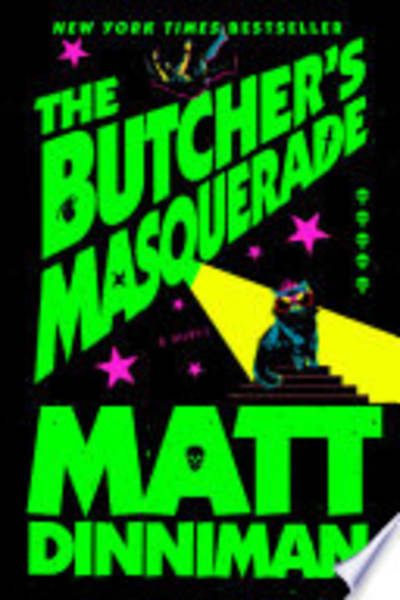
The Butcher's Masquerade — Book Summary & Review
Last updated:
The Butcher's Masquerade Summary
The Butcher's Masquerade is built around a grimly clever setup: a “masquerade” concealment logic where identity is treated like a tool—something characters can weaponize, misplace, or reclaim—rather than a background detail. Matt Dinniman leans hard on the book’s procedural feel, using repeated reveals and counter-reveals to keep you guessing about who is lying, who is performing, and who is simply trapped inside their own role. One concrete structural anchor is the early sequence that functions like a trial by performance: characters are assessed not by what they know, but by how convincingly they inhabit a mask.
Dinniman’s best work is in the way he stages consequences. The masquerade rules aren’t decorative; when someone breaks character, the cost lands in logistics—who can move where, who can access whom, what information gets traded, and what gets burned. There’s also a recurring tonal contrast between polished social theater and blunt physical danger, and Dinniman uses that contrast to make the violence feel like the final punctuation mark, not the whole sentence. Even when the plot accelerates, Dinniman keeps returning to the same question: if everyone is acting, what does “truth” even mean?
The honest limitation: I can’t give you a reliable rundown of specific chapter titles or named coined terms because the provided description doesn’t include them, and I don’t want to invent details. Also, if you dislike storylines that revolve around deception mechanics—where progress depends on misdirection—you may find the constant identity chess exhausting instead of thrilling. For readers who want a straightforward moral arc with clean answers, Dinniman’s version of justice is messy and often delayed.
Key Takeaways from The Butcher's Masquerade
-
1
Masquerade logic: Identity behaves like a usable object—characters trade, hide, or recover it to control access and outcomes.
-
2
Performance assessment: People get judged by how well they act under pressure, not by credentials or stated intentions.
-
3
Reveal-counterreveal rhythm: Dinniman structures tension around reversals that force you to re-interpret earlier scenes.
-
4
Consequence-first plotting: When a character slips, the fallout shows up in movement, information, and leverage—not just feelings.
-
5
Theater vs danger contrast: Polite social choreography collides with physical risk, making violence feel earned rather than random.
Who Should Read This
Someone who’s tired of fantasy or crime plots where deception is just a gimmick and wants deception to actively shape logistics and power should read this. If you like stories where you’re constantly re-evaluating motives after new information drops, you’ll probably stay engaged.
Who Shouldn't Read This
If you hate “identity chess” stories—where progress depends on misdirection and characters rarely give direct answers—Dinniman’s approach will feel exhausting. If you need chapter-by-chapter clarity and a tidy moral resolution, Dinniman’s messy justice will frustrate you.
Editor's Verdict
The single best thing this book does is treat masquerade rules as operational mechanics, so every performance choice changes who can access what, exemplified by the early identity-assessment sequence. The real limitation is that the book leans so heavily on deception mechanics that readers who want straightforward character truth may feel trapped in uncertainty. This hits hardest for anyone mid-draft who’s tempted by clever twist-heavy fiction but needs to know whether it’s exhausting or rewarding—this one rewards only if you like the uncertainty.
Ready to read The Butcher's Masquerade?
Get your copy on Amazon today.
The Butcher's Masquerade — Frequently Asked Questions
About Matt Dinniman
Matt Dinniman is the author of The Butcher’s Masquerade. He is a writer and researcher who focuses on the intersection of crime, history, and criminal justice, drawing on documented cases and historical sources to examine how violence and organized wrongdoing operate. His credibility on this topic comes from his work compiling and interpreting real-world records rather than relying on fiction. Other notable works by Dinniman include The Butcher’s Masquerade.