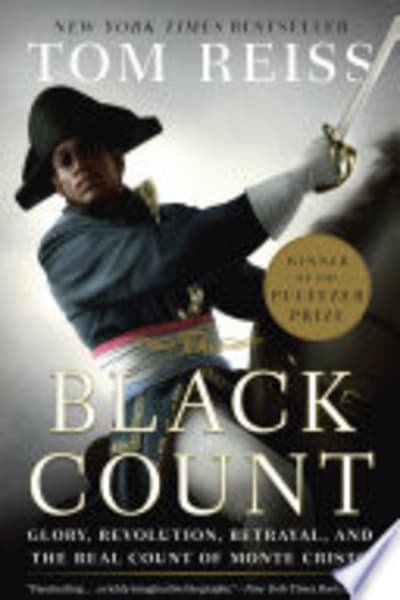
The Black Count — Book Summary & Review
by Tom Reiss
Last updated:
The Black Count Summary
Tom Reiss's 'The Black Count' opens with General Alex Dumas's remarkable ascent in the French military, a feat detailed in the early chapter 'The Black Devil'. Reiss meticulously chronicles Dumas's life, from his birth in Saint-Domingue as the son of a black slave to his command of armies during the French Revolution. The book is structured chronologically, painting a vivid picture of the tumultuous era through Dumas’s adventures and misfortunes. Reiss uses rich detail to evoke the socio-political landscape of 18th-century France, making Dumas's story relevant to discussions of race and identity today. However, the book sometimes gets bogged down in excessive detail about military maneuvers, which might not appeal to readers looking for a more personal narrative. Reiss frequently draws parallels between Dumas's life and the novels of his son, Alexandre Dumas, particularly 'The Count of Monte Cristo', adding a layer of literary intrigue. While the depth of historical context is impressive, some might find the narrative overwhelms the personal aspects of Dumas’s life, leaving emotional connections underexplored.
Key Takeaways from The Black Count
-
1
The Black Devil: A nickname Dumas earned for his fearless leadership against the Austrians, highlighting his military prowess.
-
2
The Triangular Trade: Reiss explains this economic system to contextualize Dumas's early life in the colonies.
-
3
The Affair of the Black Count: A pivotal moment when Dumas's racial identity is challenged yet also solidifies his legacy.
-
4
The Revolutionary Army: Reiss illustrates how Dumas navigated and rose within the complex hierarchy of revolutionary France.
-
5
Dumas vs. Bonaparte: Reiss contrasts their careers, noting how Dumas's ideals clashed with Bonaparte's ambitions.
Who Should Read This
Someone who is fascinated by untold stories of historical figures, particularly those involving race and military exploits. If you're exploring how personal stories intersect with larger historical narratives, this book offers a detailed examination.
Who Shouldn't Read This
If you dislike dense historical detail or military strategy, this book might frustrate you with its extensive focus on these elements. Readers looking for a deeper emotional exploration of Dumas's personal life might find the narrative lacking in intimacy.
Editor's Verdict
Reiss excels in 'The Affair of the Black Count', where he captures the tension between Dumas's identity and his achievements. The book's deep dive into military history can deter those seeking a more straightforward narrative. If you're at a point where you're questioning the stories history chooses to remember, this book is a compelling exploration.
Ready to read The Black Count?
Get your copy on Amazon today.
The Black Count — Frequently Asked Questions
About Tom Reiss
Tom Reiss is an American author and journalist, best known for his Pulitzer Prize-winning biography "The Black Count: Glory, Revolution, Betrayal, and the Real Count of Monte Cristo." Born in 1964, Reiss studied at Harvard University, where he honed his research skills. His credibility on the topic stems from extensive archival research in France and other countries. Reiss is also known for "The Orientalist," exploring the life of Lev Nussimbaum, and "The Man Who Invented Fiction" about Miguel de Cervantes.