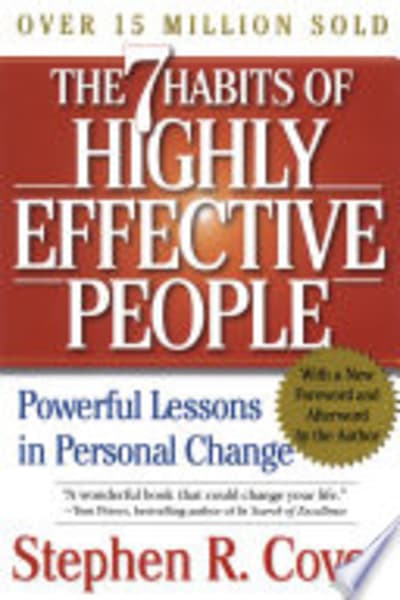
The 7 Habits of Highly Effective People — Book Summary & Review
Last updated:
The 7 Habits of Highly Effective People Summary
Covey lays out the “Character Ethic” as the groundwork for effective living, insisting that principles like integrity and fairness are universal and enduring. The book is organized around seven habits, each given a chapter—“Be Proactive,” “Begin with the End in Mind,” and the rest—so the structure feels orderly even when the ideas start to blur. Covey pushes readers to align actions with values, using the “Emotional Bank Account” metaphor to explain how trust accumulates or evaporates in relationships. Despite the praise for its practical guidance, Covey’s prose can be heavy, and his treatment of emotional intelligence is thin enough to irritate readers looking for a more textured view of human behavior. The “Think Win-Win” chapter, for instance, may leave some wanting sharper conflict-resolution tactics.
Key Takeaways from The 7 Habits of Highly Effective People
-
1
The Character Ethic: Covey argues that true success is based on principles like integrity, rather than quick-fix personality strategies.
-
2
Emotional Bank Account: A metaphor for building and maintaining trust in relationships through consistent, small acts of kindness.
-
3
Be Proactive: Covey advises taking responsibility for your actions and responses, rather than blaming external circumstances.
-
4
Begin with the End in Mind: Envision your future goals clearly to guide daily decisions and actions toward meaningful outcomes.
-
5
Think Win-Win: A mindset that seeks mutually beneficial solutions in interactions, rather than competing for scarce resources.
Who Should Read This
Someone who feels stuck in their personal or professional life and needs a structured approach to change. If you're overwhelmed by daily decisions and lack clear goals, this book offers frameworks to regain control.
Who Shouldn't Read This
If you're looking for a deep dive into emotional intelligence or a focus on interpersonal skills, this book might disappoint. Covey's principles focus more on personal effectiveness rather than complex social dynamics or emotional nuance.
Editor's Verdict
Covey's best contribution is the 'Emotional Bank Account' concept, which offers a simple yet profound way to think about relationships. However, the book's focus on rigid frameworks may not resonate with those who prefer a more intuitive approach. Anyone at a career crossroads or facing a major life decision will find Covey's structured advice particularly useful.
Ready to read The 7 Habits of Highly Effective People?
Get your copy on Amazon today.
The 7 Habits of Highly Effective People — Frequently Asked Questions
About Stephen R. Covey
Stephen R. Covey (1932–2012) was an American educator, author, and businessman renowned for his expertise in leadership and personal effectiveness. He earned an MBA from Harvard University and a Doctorate of Religious Education from Brigham Young University. Covey's credibility stems from his extensive research and practical application of leadership principles. Besides "The 7 Habits of Highly Effective People," he authored "First Things First" and "The 8th Habit: From Effectiveness to Greatness," further cementing his influence in personal development.