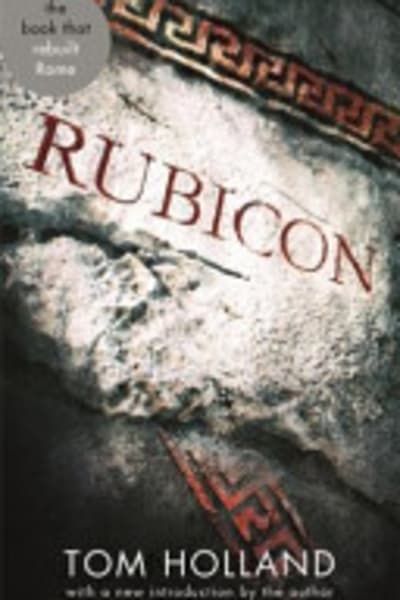
Rubicon — Book Summary & Review
by Tom Holland
Last updated:
Rubicon Summary
In Rubicon, Tom Holland meticulously structures his narrative around the pivotal moment when Julius Caesar crossed the Rubicon River in 49 B.C., igniting the civil war that transformed Rome from a republic into an empire. Holland's account is a tapestry of vibrant historical figures, from Cicero to Cleopatra, each given depth and personality. One standout chapter, 'The Rubicon,' captures the tense atmosphere leading up to this monumental event, illustrating the decay of republican ideals. Holland expertly balances scholarly rigor with engaging storytelling, making ancient Rome's political machinations accessible and thrilling. However, those looking for a detailed military analysis may find the book lacking, as Holland focuses more on the political and social intricacies of the era rather than the specifics of military campaigns.
Key Takeaways from Rubicon
-
1
Crossing the Rubicon: Holland uses Caesar's crossing as a metaphor for irreversible decisions and the consequences they bring.
-
2
The Republic's Twilight: Illustrates how political corruption and ambition gradually eroded Rome's republican values, leading to its downfall.
-
3
Character Studies: Holland vividly portrays historical figures, providing nuanced insights into their motivations and actions.
-
4
The Role of Oratory: Cicero's speeches are highlighted as both political tools and reflections of the era's turbulent atmosphere.
-
5
Cultural Transformations: Explores how Rome's expansion and internal conflicts spurred shifts in social norms and cultural identity.
Who Should Read This
Someone who is fascinated by the intricate dance of political schemes and the personalities behind them will find this book enriching. If you're a history enthusiast eager to understand the social dynamics that led to Rome's transformation into an empire, this is your pick.
Who Shouldn't Read This
If you're looking for a detailed military history with battlefield tactics and strategies, this book might disappoint. Those expecting a straightforward chronological account may struggle with Holland's thematic and character-driven approach.
Editor's Verdict
The best aspect of Rubicon is its vivid character portrayals, especially in 'The Death of Cicero', which brings historical figures to life. However, its focus on political and social themes means it lacks in-depth military analysis. This book is perfect for anyone captivated by the drama of political power plays, especially if you're pondering how ambition and rhetoric shape history.
Ready to read Rubicon?
Get your copy on Amazon today.
Rubicon — Frequently Asked Questions
About Tom Holland
Tom Holland is a British historian and author, known for his expertise in ancient history. He studied English at Queens' College, Cambridge, where he developed a strong foundation in classical studies. Holland's credibility on the topic is reinforced by his meticulous research and engaging narrative style. In addition to "Rubicon: The Last Years of the Roman Republic," he has authored other notable works such as "Persian Fire" and "Dynasty: The Rise and Fall of the House of Caesar."