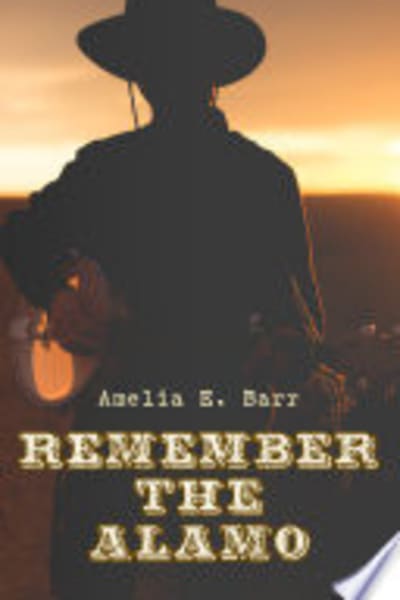
Remember the Alamo — Book Summary & Review
Last updated:
Public domain via Project Gutenberg — free and legal.
Remember the Alamo Summary
Remember the Alamo is built around Robert Worth’s steady, bureaucratic path into Texas life, and then Barr turns that “ordinary man” setup into a siege narrative that keeps snapping back to motive and duty. Early on, Robert’s New York training and the friendship with Don Jaime Urrea aren’t decoration; they’re Barr’s way of explaining why the Alamo matters to someone who never planned to be a hero. The story’s backbone is the doctor’s practical temperament—he notices needs, counts resources, and measures risk—so the later chaos feels earned rather than theatrical.
Barr also leans hard into how information travels during the 1836 crisis: rumors, letters, and conversations with different sides of the conflict. Robert’s relationships become a kind of map of Texas society, from businesslike newcomers to established Mexican figures, and Barr uses those ties to show that the siege isn’t only about gunfire; it’s also about loyalties, misunderstandings, and what people choose to protect when the clock runs out. One concrete example is how Barr repeatedly returns to Robert’s medical role—tending injuries, judging urgency, and forcing himself to act under pressure—even as the narrative tightens toward the Alamo’s final days.
If you want a specific structural anchor, Barr’s chapter movement keeps re-centering Robert’s decisions after each new escalation, so the book reads like a chain of choices rather than a straight escalation ladder. That approach is Barr’s strength: she makes the tragedy feel personal without abandoning the historical frame.
Limitation: this is juvenile historical fiction written in 1888, so the prose can sound moralizing and the character psychology is simpler than modern historical novels. If you’re hunting for gritty battlefield realism or complex adult ambiguity, Barr will frustrate you.
Key Takeaways from Remember the Alamo
-
1
Robert Worth’s “ordinary” entry into Texas: Barr uses his non-adventurer background to make the siege feel like consequence, not spectacle.
-
2
Don Jaime Urrea as a loyalty test: the friendship functions as a pressure gauge, showing how relationships shift when politics harden.
-
3
Robert’s medical perspective: injuries and triage become the story’s moral engine, forcing choices under time, fear, and limited supplies.
-
4
Information travel during 1836: rumors and letters shape decisions, so Barr treats communication as a battlefield tool.
-
5
Chapter-by-chapter decision re-centering: Barr repeatedly resets the narrative on what Robert chooses next, keeping motives in focus.
Who Should Read This
If you’re someone who wants historical fiction where the “why” of character choices matters as much as the events, this will land. Someone who’s tired of purely action-driven Civil War–style storytelling and wants a doctor’s-eye view of the Alamo should give Barr a try.
Who Shouldn't Read This
If you need morally ambiguous adults, Barr’s tone will feel too directive and emotionally simplified. If you expect modern pacing and immersive realism, the 1888 juvenile-fiction voice—and its tidy psychological explanations—will feel dated and frustrating.
Editor's Verdict
Remember the Alamo works best when Barr uses Robert Worth’s medical role to keep the siege human, especially in the recurring moments where he judges urgency and acts despite panic. The limitation is that Barr writes with an 1888 juvenile-fic moral compass, so the inner lives and uncertainties modern readers crave are often flattened. This hits hardest for readers who grew up on historical adventure but now want to revisit a pre-20th-century style before they judge the Alamo story too harshly.
Ready to read Remember the Alamo?
Get your copy on Amazon today.
Remember the Alamo — Frequently Asked Questions
About Amelia E. Barr
Amelia E. Barr (1831–1919) was a Scottish-born American author and journalist who lived in the United States. She wrote historical fiction grounded in extensive research and firsthand accounts, making her credible on U.S. frontier and revolutionary-era topics. Her novel Remember the Alamo (1889) focuses on the events surrounding the 1836 siege. Other notable works include In the Golden Days (1883) and The Bow of Orange Ribbon (1873).