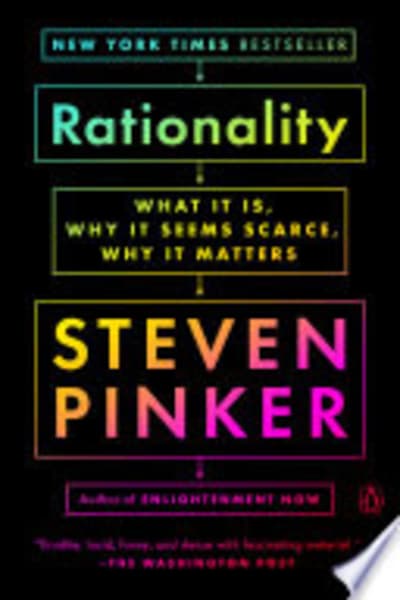
Rationality — Book Summary & Review
Last updated:
Rationality Summary
Steven Pinker sets the stage in 'Rationality' with his introduction of the 'Mental Software' framework, which outlines the cognitive tools we use for rational thinking. The book is structured around exploring different aspects of rationality, from probability theory to logic puzzles, and Pinker excels in illustrating these concepts with real-world examples, such as the Monty Hall problem. A standout chapter, 'Logic and Rational Choice', provides a detailed look at decision-making processes through the lens of game theory. Pinker's writing is both accessible and engaging, making complex ideas digestible for the lay reader. However, the book tends to focus heavily on Western modes of thought, which may frustrate readers looking for a more global perspective on rationality. Additionally, while Pinker discusses the benefits of rational thinking, the book does not delve deeply into how individuals can practically cultivate these habits in their daily lives.
Key Takeaways from Rationality
-
1
Mental Software: Pinker describes our cognitive tools as software that can be upgraded for better rational thinking.
-
2
The Monty Hall Problem: A classic probability puzzle that Pinker uses to demonstrate common errors in human reasoning.
-
3
The Availability Heuristic: Pinker explains how recent or memorable events distort our perception of probability and risk.
-
4
Rational Choice Theory: Explored in depth, this theory analyzes how individuals make decisions based on perceived costs and benefits.
-
5
Bayesian Reasoning: Pinker advocates for this statistical method as a way to update beliefs based on new evidence.
Who Should Read This
Someone who finds themselves constantly second-guessing their decisions and wants a clearer framework for thinking critically. If you're grappling with understanding why people often act irrationally, this book offers some clarity.
Who Shouldn't Read This
If you're looking for a book that provides practical exercises to improve rational thinking, you might be disappointed. Those who seek a multicultural perspective on rationality will find the book's focus limited.
Editor's Verdict
The best aspect of 'Rationality' is Pinker's breakdown of the Monty Hall problem, making a complex topic accessible. The book's limitation is its predominantly Western-centric view on rationality. Anyone currently questioning the rationality of their decisions will find this book enlightening at a theoretical level.
Ready to read Rationality?
Get your copy on Amazon today.
Rationality — Frequently Asked Questions
About Steven Pinker
Steven Pinker is a Canadian-American cognitive psychologist, linguist, and popular science author, known for his work on language and the mind. He is a professor at Harvard University and has a Ph.D. in experimental psychology from Harvard. Pinker's expertise in cognitive psychology and rational thought makes him credible on the topic of rationality. Notable works include "The Better Angels of Our Nature" and "Enlightenment Now," both of which explore human progress and rationality.