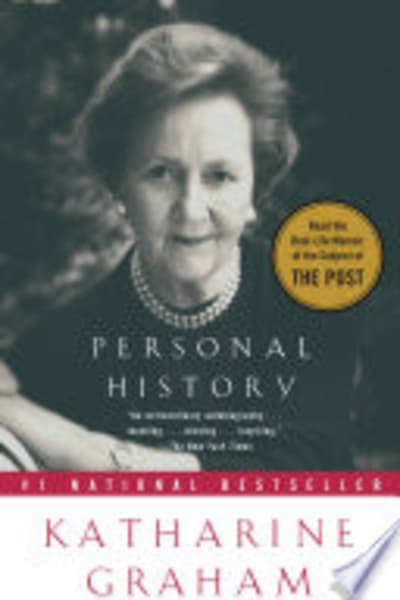
Personal History — Book Summary & Review
Last updated:
Personal History Summary
Katharine Graham's 'Personal History' opens with a detailed account of her father, Eugene Meyer's, acquisition of The Washington Post during its financial decline—a pivotal moment that sets the tone for the whole narrative. The book is structured into distinct parts, including one that dives into the complexities of her marriage to Phil Graham, a legal prodigy whose struggle with mental illness is explored in depth. Graham provides a striking chapter titled 'The Transition', where she candidly recounts her unexpected rise to leadership after her husband's tragic death. Through her lens, we witness the transformation of The Washington Post from a struggling paper into a powerhouse of American journalism. However, the book primarily focuses on her personal and professional journey, leaving those seeking deep dives into the political landscape wanting more.
Key Takeaways from Personal History
-
1
The Transition: Graham's rise to leadership after personal tragedy highlights resilience and the unexpected paths life may take.
-
2
Phil Graham's Illness: An intimate portrayal of mental illness, exploring its impact on relationships and personal growth.
-
3
Washington Post Evolution: Insights on the strategic decisions that turned the paper into a journalistic giant.
-
4
Her Father's Vision: Eugene Meyer's investment in the paper is shown as a driving force behind its success.
-
5
Cultural Naivete: Graham's initial ignorance of her Jewish heritage reflects broader themes of identity and self-discovery.
Who Should Read This
Someone who is navigating unexpected leadership challenges will find Graham's journey inspiring. If you're intrigued by the intricate balance of personal and professional life in high-stakes environments, this book will resonate.
Who Shouldn't Read This
If you're looking for a deep political analysis of The Washington Post's role in historical events, this isn't the book for you. Those who prefer concise narratives may find the 642-page length daunting and overly detailed.
Editor's Verdict
The book's most riveting aspect is its candid exploration of leadership in 'The Transition'. Its primary limitation is the extensive focus on personal anecdote at the expense of broader political analysis. Perfect for someone stepping into a leadership role unexpectedly, grappling with personal challenges, or seeking a narrative of resilience.
Ready to read Personal History?
Get your copy on Amazon today.
Personal History — Frequently Asked Questions
About Katharine Graham
Katharine Graham (1917–2001) was an influential American publisher and author, best known for her memoir "Personal History," which won the Pulitzer Prize in 1998. As the daughter of Eugene Meyer, former owner of The Washington Post, she became the newspaper's publisher in 1963, guiding it through the Pentagon Papers and Watergate scandal. Her leadership established her credibility in journalism and media. She also authored "Katharine Graham's Washington," further detailing her experiences in the capital's elite circles.