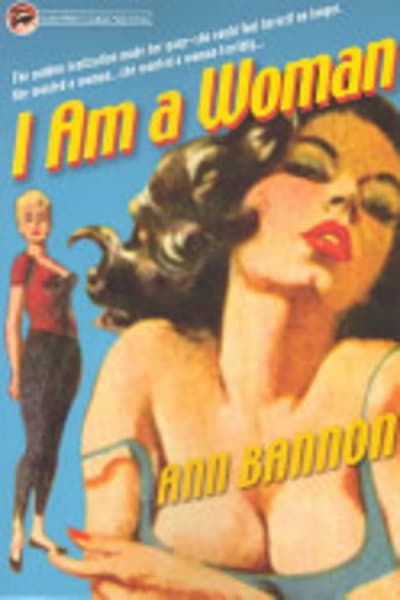
I am a woman — Book Summary & Review
by Ann Bannon
Last updated:
Public domain via Project Gutenberg — free and legal.
I am a woman Summary
I Am a Woman is built around Ann Bannon’s recurring “L” code for Beebo and Laura—L for Love, Lust, Lesbian, and the playfully blunt “L for the L of it”—and that structure keeps the novel’s talky barroom intimacy from turning into mere nostalgia. The book follows Laura’s entry into a New York lesbian nightlife circuit, where desire is treated like a social language: you learn it by being around it, by getting the rules wrong, and by taking the consequences anyway. Bannon’s best scenes aren’t the big declarations; they’re the small negotiations—who gets to be “serious,” who’s allowed to want, who gets forgiven, and who has to pretend they don’t care. One concrete example is the Cellar sequence, where Beebo’s monologue turns the setting into a ledger of relationships, and Laura has to decide whether she’s willing to be counted in that way. Another is the way Bannon stages repeated patterns of living-together love: the romance promises freedom, then immediately tightens into routine, jealousy, and fear. Bannon also keeps returning to the men surrounding the women—sometimes as pressure, sometimes as refuge, sometimes as a blunt reminder that “normal” is a story others wrote. That tension isn’t theoretical; it shows up in the characters’ daily calculations about safety and reputation. The limitation is real: this is pulp-era character drama with dated attitudes and a focus on romantic/sexual dynamics over broader politics or community organizing, so readers wanting historical depth, activism, or nuanced interiority beyond the bar conversation may feel underfed. If you come for the slangy heat and the social choreography of wanting, Bannon delivers; if you come for something more expansive, you’ll likely bounce.
Key Takeaways from I am a woman
-
1
L for Love: Beebo’s letter-game names desire as a set of shifting roles, not a single identity you can lock in.
-
2
Cellar social geography: The setting works like a map—who sits where, who watches, and who speaks first changes outcomes.
-
3
Living-together loops: Bannon shows how “half of the half” can mean comfort that also turns into possession and rehearsal.
-
4
Men as pressure: Relationships with men function less as romance than as leverage, risk management, and reputation control.
-
5
Pulp dialogue realism: The book’s emotional logic runs through talk—confession, teasing, and bargaining do most of the storytelling.
Who Should Read This
If you’re stuck in the messy middle of wanting someone who also feels like a threat to your stability, this will speak to that exact tension. Someone who’s trying to understand how sexuality operates as social life—where flirting, fear, and loyalty overlap—will get a lot out of I Am a Woman.
Who Shouldn't Read This
If you need modern pacing, psychological depth, or a plot that moves beyond relationship cycles, you’ll find Bannon’s focus narrow and repetitive. If you’re uncomfortable with 1950s pulp framing around gender and “respectability,” the book’s dated attitudes will irritate you more than they’ll entertain you.
Editor's Verdict
Ann Bannon’s sharpest move is the way she uses the “L” motif and the Cellar monologue to treat desire as a social system, not just private feeling. The limitation is that the novel stays mostly in romance-and-sex dynamics, offering little historical or political context for the wider world around these women. This hits hardest for someone coming to lesbian fiction after reading modern lit expecting interior complexity every page—especially if you’re mid-identity-questioning and want to feel the period’s emotional constraints in real time.
Ready to read I am a woman?
Get your copy on Amazon today.
I am a woman — Frequently Asked Questions
About Ann Bannon
Ann Bannon (born Ann Weldy, 1938) is an American novelist known for lesbian pulp fiction. She grew up in the Midwest and worked in publishing and advertising before writing her breakthrough series. She is credible on this topic because she wrote early, widely read fiction centered on lesbian identity and relationships during the mid-20th century. Other notable works include Beebo Brinker and Journey to a Woman.