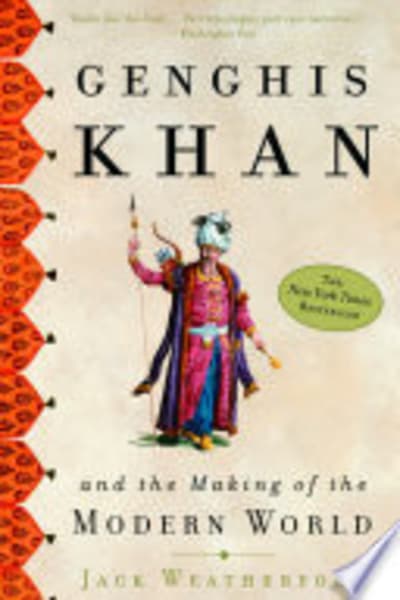
Genghis Khan and the Making of the Modern World — Book Summary & Review
Last updated:
Genghis Khan and the Making of the Modern World Summary
Weatherford begins by presenting Genghis Khan not merely as a conqueror, but as a ruler who laid the groundwork for global connections. The book is split into three parts, each tracing a distinct phase of Khan’s life and the ripple effects of his empire. Chapter 6, “The Discovery and Conquest of Europe,” pushes a sharper reassessment of the Mongols’ role in European development. Weatherford contends that Khan’s policies on religious freedom and trade were revolutionary, directly challenging the old habit of treating him as nothing more than a barbaric invader. Still, readers hoping for a detailed military history may feel shortchanged: the focus falls on cultural and economic consequences rather than battle tactics. Weatherford’s storytelling is lively, but the absence of detailed military strategy will disappoint some.
Key Takeaways from Genghis Khan and the Making of the Modern World
-
1
The Great Taboo: Weatherford gained unique access to Genghis Khan's homeland, offering new insights into Mongol culture and burial practices.
-
2
Religious Freedom: Khan's policy of religious tolerance was unprecedented, allowing diverse faiths to flourish under Mongol rule.
-
3
Free Trade Routes: Weatherford details how the Mongols created vast trade networks that connected Asia and Europe, altering global commerce.
-
4
International Paper Currency: The Mongols introduced this economic innovation, which facilitated easier trade across vast distances.
-
5
Postal System: Weatherford describes the first international postal system, which the Mongols developed to maintain control over their empire.
Who Should Read This
Someone who wants to understand the broader cultural and economic impacts of Genghis Khan rather than just his military conquests. If you're fascinated by how historical figures influence modern systems, this book provides a fresh perspective.
Who Shouldn't Read This
If you are looking for a detailed analysis of Mongolian military strategies, this book will disappoint. Weatherford focuses more on cultural and administrative achievements than on tactical specifics.
Editor's Verdict
Weatherford shines in illustrating the Mongol Empire's influence on modern trade and international relations, particularly in the chapter 'Spreading the Wealth'. The book's shortfall is its lack of detailed military analysis, which some readers may crave. This book is perfect for anyone questioning the simplistic narratives of history they learned in school.
Ready to read Genghis Khan and the Making of the Modern World?
Get your copy on Amazon today.
Genghis Khan and the Making of the Modern World — Frequently Asked Questions
About Jack Weatherford
Jack Weatherford is an American author and anthropologist born in 1946. He is a former professor of anthropology at Macalester College in Minnesota. Weatherford is renowned for his expertise on Mongolian history and culture, which he explores in his book "Genghis Khan and the Making of the Modern World." His credibility stems from extensive research and fieldwork in Mongolia. Other notable works include "The Secret History of the Mongol Queens" and "Indian Givers: How Native Americans Transformed the World."