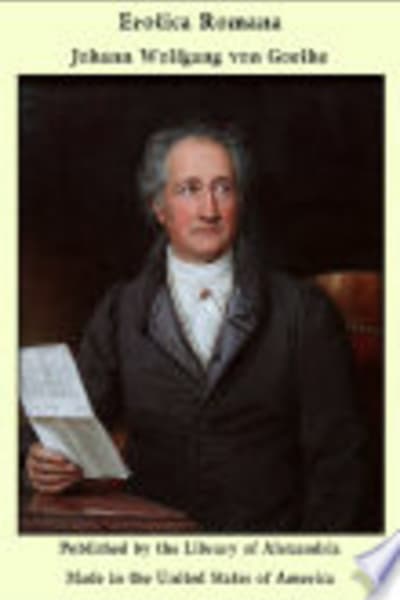
Erotica Romana — Book Summary & Review
Last updated:
Public domain via Project Gutenberg — free and legal.
Erotica Romana Summary
Erotica Romana is structured as a set of erotic pieces that circle around Roman settings and classical attitudes toward desire, and the organizing idea is the contrast between cultivated restraint and frank physicality. Goethe’s last name matters here because the book’s voice borrows authority from “Roman” form while still letting the body talk louder than the rhetoric. One recurring framework is the use of staged fantasies—scenes that feel like they’re happening inside a costume box of antiquity—so Goethe can treat sex as both pleasure and performance. You see this logic most clearly in the way the text keeps returning to the same emotional mechanics: anticipation, interruption, and then a release that’s described with a deliberately artful calm rather than frantic heat.
Goethe’s last name also shows up in the book’s insistence that erotic writing can be “literary” without becoming clinical; the narration lingers on detail and rhythm the way a poet lingers on meter. Even when the scenes are explicit, the book keeps reminding you that the speaker is shaping a mood, not merely reporting an event. A concrete example is the recurring Roman-flavored posture toward secrecy—desire treated as something social, regulated by who knows and who doesn’t, not only something private. Another example is the frequent pivot from public decorum to private indulgence, where the shift feels like a small thesis: civilization is a mask, and the mask cracks.
Honest limitation: this is not a historical guide to Rome and it doesn’t aim to explain consent or psychology in modern terms; it’s mostly about style, atmosphere, and erotic escalation, so readers who want moral argument or real-world grounding will feel stranded.
Key Takeaways from Erotica Romana
-
1
Roman staging: Goethe uses antiquity as costume, so the erotic action reads like theater with a clear mood.
-
2
Mask-and-release: Desire is framed as decorum breaking, then the narrative lingers on the emotional temperature change.
-
3
Rhythmic description: Goethe treats explicitness as craft—sentence cadence and detail do as much work as plot.
-
4
Secrecy mechanics: The text repeatedly ties arousal to hidden knowledge, turning privacy into plot fuel.
-
5
Literary authority: Goethe borrows classical posture to keep the voice polished even when the content turns physical.
Who Should Read This
Someone who already enjoys classical-styled erotic fiction and wants the writing to feel “curated” rather than raw will probably get what Erotica Romana is doing. If you’re tired of modern erotic stories that feel either preachy or sloppy, Goethe’s Roman framing may scratch the itch.
Who Shouldn't Read This
If you need modern ethical clarity—especially around consent, power, or emotional fallout—Goethe’s approach will frustrate you. If explicit content makes you impatient with atmosphere and you want plot-driven romance instead, this book’s emphasis on mood and performance will feel like wasted time.
Editor's Verdict
Erotica Romana’s best trick is its Roman framework for desire—Goethe builds a recurring pattern of decorum turning into private indulgence, and the shift is where the book earns its attention. The real limitation is that it offers little beyond erotic staging and verbal craft, with no sustained moral, psychological, or historical payoff. This hits hardest for readers who love stylized erotic literature and are in the mood for controlled, artful explicitness—especially if you’ve been disappointed by either clinical porn or overly plotty romance.
Ready to read Erotica Romana?
Get your copy on Amazon today.
Erotica Romana — Frequently Asked Questions
About Johann Wolfgang von Goethe
Johann Wolfgang von Goethe (1749–1832) was a German writer and statesman from Frankfurt am Main, educated in law at Leipzig and Strasbourg. He became a leading figure of German literature and produced extensive works on human desire, sexuality, and classical antiquity. He is credible on this topic because he wrote from firsthand literary engagement with Roman themes and erotic poetry. Other notable works include The Sorrows of Young Werther and Faust.