Children of Time — Book Summary & Review
Last updated:
Children of Time Summary
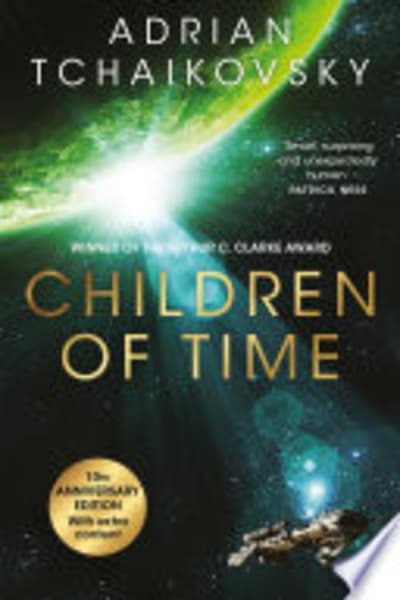
In 'Children of Time', Tchaikovsky introduces readers to the concept of the 'uplift', a transformative process intended to accelerate the evolution of new species on a terraformed planet. Unfortunately for the remnants of humanity seeking refuge, this uplift process results in highly intelligent spiders instead. Tchaikovsky's narrative oscillates between the survival struggles of the human crew aboard the Gilgamesh spaceship and the evolving spider society on the planet. The chapter 'The First Colony' is particularly striking, detailing the spiders' complex social structures and their confrontation with the alien concept of humanity. While Tchaikovsky crafts a fascinating dual-civilization story, the book's sprawling 616 pages might overwhelm readers seeking a brisk sci-fi thriller. Moreover, those hoping for deep character exploration might be left wanting, as the book focuses more on grand-scale civilization dynamics.
Key Takeaways from Children of Time
-
1
The Uplift: A failed experiment to accelerate evolution, leading to a world dominated by intelligent spiders instead of humans.
-
2
Gilgamesh's Dilemma: The human ship must navigate dwindling resources and internal conflicts while searching for a habitable planet.
-
3
Spider Society: Explores a matriarchal, cooperative civilization that mirrors and contrasts with human societal structures.
-
4
Kern's Legacy: The remnants of Earth's technology influence the planet's evolution in unexpected and often dangerous ways.
-
5
Human-Spider Communication: Tchaikovsky examines the challenges and breakthroughs of interspecies communication between vastly different beings.
Who Should Read This
Someone who loves complex world-building and is fascinated by evolution and biology in speculative fiction. If you are intrigued by the idea of non-human intelligence and alternate societal structures, this book is for you.
Who Shouldn't Read This
If you're looking for a fast-paced, character-driven narrative, this might not satisfy. The dense scientific detail and slow-burning plot might deter those who prefer quick reads.
Editor's Verdict
Tchaikovsky excels at weaving a captivating tale of two evolving civilizations in 'The First Colony'. However, the slow narrative pace might frustrate readers seeking action-packed sequences. Anyone curious about speculative biology and societal evolution will find this book rewarding at a leisurely pace.
Ready to read Children of Time?
Get your copy on Amazon today.
Children of Time — Frequently Asked Questions
About Adrian Tchaikovsky
Adrian Tchaikovsky, born in 1972 in Lincolnshire, England, is a renowned science fiction and fantasy author. He holds a degree in zoology and psychology from the University of Reading, contributing to his credibility in writing complex, biologically rich narratives like "Children of Time." Tchaikovsky is also known for his "Shadows of the Apt" series and the novel "The Doors of Eden." His works often explore themes of evolution, technology, and societal structures.