Behave — Book Summary & Review
Last updated:
Behave Summary
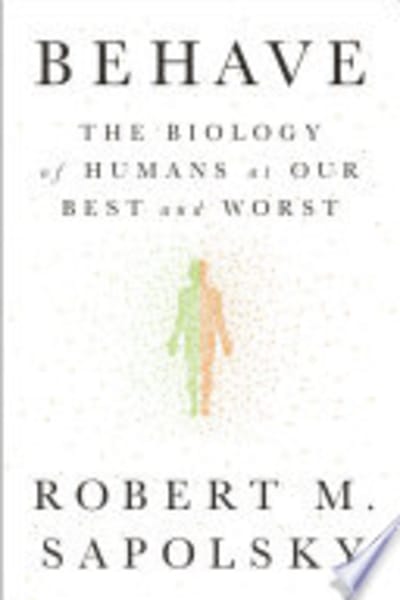
Sapolsky’s Behave opens by scrutinizing the neurobiological processes firing in the seconds just before a behavior appears, framing a rigorous walk through time and biology. The book is organized to strip away layers of causation, from immediate sensory triggers to evolutionary history, giving readers a full framework for how human behavior takes shape. A particularly effective section, “One Second Before,” focuses on the split-second neural responses preceding action, sharpening the book’s larger argument. For all its scientific richness, the density is so relentless it can deter anyone hoping for something lighter. Still, readers willing to work will find a hard-edged exploration of tribalism, morality, and the machinery inside our brains, even if the emphasis sometimes leaves everyday practical application conspicuously thin.
Key Takeaways from Behave
-
1
One Second Before: Examines neural activities occurring immediately before a behavior, emphasizing the immediacy of neurobiological processes.
-
2
The Cultural Layer: Sapolsky argues that culture shapes neural pathways, influencing behaviors beyond individual genetic predispositions.
-
3
The Endocrine Influence: Highlights how hormones affect responsiveness to stimuli, adding another layer to behavioral understanding.
-
4
The Ecological Context: Discusses how environmental factors impact brain development and subsequent behavior on both individual and societal levels.
-
5
Evolutionary Shadows: Explores how ancient evolutionary pressures continue to influence modern human behavior, often subconsciously.
Who Should Read This
Someone who is fascinated by the intricate web of factors influencing human actions and is ready for a deep dive into science. If you are questioning how biology, environment, and culture intertwine to shape behavior, this book offers a rigorous exploration.
Who Shouldn't Read This
If you're looking for a quick read or practical tips on behavior modification, Sapolsky's hefty tome will likely frustrate you. The book's complexity and scientific depth require patience and a willingness to engage with dense material.
Editor's Verdict
The book excels at integrating cross-disciplinary research, particularly in the chapter 'Cultural Contexts' which ties together neuroscience and anthropology. However, its academic tone and length can be daunting, especially for casual readers. Perfect for anyone experiencing a mid-career crisis who wants to understand the deeper biological and cultural forces at play in human interactions.
Ready to read Behave?
Get your copy on Amazon today.
Behave — Frequently Asked Questions
About Robert Sapolsky
Robert Sapolsky is a renowned American neuroendocrinologist and author, known for his work on stress and behavior. He is a professor of biology, neurology, and neurosurgery at Stanford University. Sapolsky's credibility stems from his extensive research on primates and human behavior. His notable works include "Why Zebras Don't Get Ulcers," which explores stress-related health issues, and "A Primate's Memoir," detailing his experiences studying baboons in Africa. Sapolsky's interdisciplinary approach bridges biology, psychology, and anthropology.