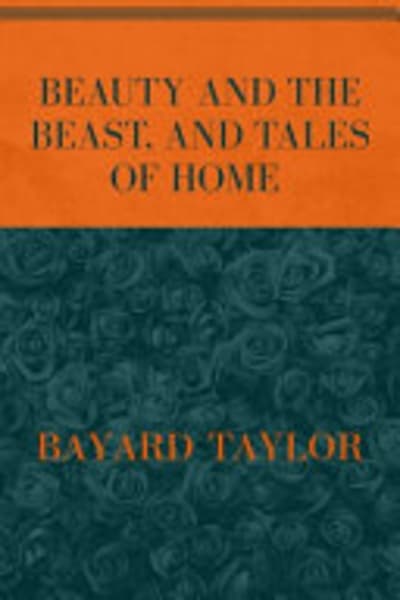
Beauty and the Beast, and Tales of Home — Book Summary & Review
Last updated:
Public domain via Project Gutenberg — free and legal.
Beauty and the Beast, and Tales of Home Summary
Bayard Taylor’s Beauty and the Beast, and Tales of Home is built as a two-part package: the familiar fairy tale, followed by a set of “home” stories that treat domestic life like a moral training ground. In the Beauty and the Beast section, Taylor leans into the social mechanics of courtship—how manners, restraint, and reputation work as much as magic does. The Beast isn’t just a monster; he’s a test of whether Beauty can hold her judgment steady when fear and curiosity start trading places.
Then Taylor pivots hard in the Tales of Home portion, where the emphasis shifts from enchanted transformation to everyday conduct—how a household teaches children to behave, how adults perform respectability, and how small choices become habits. One recurring structure in these stories is the “lesson after the trouble”: characters make a mistake that looks minor in the moment, and the narrative insists that consequences travel farther than anyone wants to admit. Taylor’s voice is plain but firm, and he keeps returning to a social idea that feels almost like a thesis: character is built through repeated actions, not sudden speeches.
A concrete example of Taylor’s method shows up when the stories linger on what people say at the table, how they correct one another, and what they refuse to ignore. The book’s power comes from that insistence on cause-and-effect inside ordinary rooms—your “home” is where your ethics get rehearsed.
Here’s the limitation: if you want a purely magical, fast-moving retelling of Beauty and the Beast, this collection won’t satisfy you. Taylor’s second half is more sermon-adjacent than fantasy-forward, and the pacing can feel dutiful for readers expecting wonder to dominate every page.
Key Takeaways from Beauty and the Beast, and Tales of Home
-
1
Beauty and the Beast: Taylor treats the Beast as a social test, where manners and restraint matter as much as magic.
-
2
Tales of Home: Everyday conduct becomes the real plot, with “lesson after the trouble” driving each story’s moral arc.
-
3
Domestic reputation: Characters are judged through how they perform respectability, not only through what they intend.
-
4
Household training: Children learn ethics through repeated corrections and routines, not through one dramatic revelation.
-
5
Moral cause-and-effect: Small choices are staged as seeds that grow into consequences, even when they seem trivial.
Who Should Read This
Someone who’s tired of fantasy that treats “morals” as background decoration will like how Taylor makes manners and household behavior central. If you’re in a season where your daily routines feel like the only thing you can control, this book’s home-centered lessons will land.
Who Shouldn't Read This
Someone expecting a modern, sleek retelling with lots of action and atmosphere will find Taylor’s second half heavy on instruction. If you read for constant wonder, you’ll resent how much Tales of Home slows down to emphasize conduct over enchantment.
Editor's Verdict
The single best thing Bayard Taylor does is structure the book so Beauty’s trial and the later Tales of Home both argue the same point: character is built through repeated behavior rather than dramatic speeches, especially in the “lesson after the trouble” moments of the home stories. The real limitation is that the collection’s moralizing tone dominates the second half, making it feel more like conduct lessons than fantasy. This will hit hardest for someone browsing before a family holiday or a new household routine, when you’re actively thinking about how daily behavior teaches everyone else.
Ready to read Beauty and the Beast, and Tales of Home?
Get your copy on Amazon today.
Beauty and the Beast, and Tales of Home — Frequently Asked Questions
About Bayard Taylor
Bayard Taylor (1825–1878) was an American poet, travel writer, and translator. He worked as a journalist and traveled widely in Europe and the Middle East, producing firsthand accounts that informed his writing about places, people, and culture. This background makes him credible for writing and adapting fairy-tale material and domestic narratives. He is also known for Poems of the Orient (1854) and his translation of Goethe’s Faust (1850).