At the Back of the North Wind — Book Summary & Review
Last updated:
Public domain via Project Gutenberg — free and legal.
At the Back of the North Wind Summary
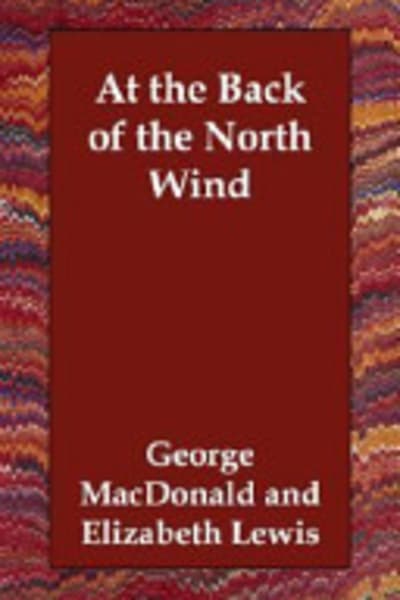
In At the Back of the North Wind, George MacDonald structures the story around Diamond’s reliance on Lady North Wind’s rules—protection braided with danger—and that framework keeps the book’s fairy-tale magic tethered to moral consequences. Diamond, a little London boy named for his father’s favorite horse, is pulled into the North Wind’s realm where weather, emotion, and death don’t stay politely symbolic; they behave like active forces. MacDonald’s most persuasive move is how he makes “care” look complicated: Lady North Wind can shelter you, but her temper also tests whether you’re learning to trust love or merely avoid pain.
The plot’s center of gravity is the series of encounters that function like mini-mysteries. When Diamond meets the strange inhabitants of the North Wind’s world, the book repeatedly asks what you do when kindness comes with teeth. In one concrete stretch, Diamond is confronted with the reality of death in a way that refuses sentimentality; the dead aren’t a comforting backdrop, they’re part of the moral weather Diamond must live through. MacDonald also uses the North Wind’s “back” as an imaginative logic—there’s always another side to mercy, another season to survive, another reason fear can be instructive instead of merely cruel.
A limitation: this is not a clean, externally plotted detective story. The “mystery” is largely spiritual and experiential, so if you want tight pacing, modern psychological clarity, or a neatly explained cosmology, MacDonald will frustrate you. The prose can feel old-fashioned, and some scenes will seem more like parable than adventure, even when they’re vividly staged.
Key Takeaways from At the Back of the North Wind
-
1
Lady North Wind: Love in this book is protective and violent, so comfort is never the same thing as safety.
-
2
Diamond’s naming: Being named for a horse turns family memory into a moral compass he carries into the supernatural.
-
3
North Wind’s temper: The story treats emotion as weather—danger is part of formation, not a random obstacle.
-
4
Death as a character: Mortality isn’t background; it presses on Diamond’s choices and changes how “goodness” behaves.
-
5
Fairy-tale logic: MacDonald’s world runs on spiritual causality, where wonder and consequence arrive together.
Who Should Read This
Someone who’s tired of stories where kindness is always gentle and predictable will find Diamond’s experience bracing. If you’re wrestling with grief or the fear that love will hurt you, MacDonald’s North Wind world gives that fear a shape.
Who Shouldn't Read This
If you want a fast, clue-by-clue mystery with a tidy explanation of the rules, this will feel slippery and too inward. If you dislike 19th-century phrasing and allegorical scenes that pause for moral atmosphere, you’ll likely bounce off MacDonald’s style.
Editor's Verdict
The single best thing George MacDonald does is make moral formation feel embodied through Lady North Wind’s “protective and violent temper,” especially in the way death is handled as lived reality rather than decoration. The real limitation is that the book’s mystery is spiritual and experiential, not a conventional plot engine with satisfying external answers. If you’re someone who’s just lost patience with sentimental children’s fiction and needs a story where love can be severe, this hits hardest in the quiet middle of Diamond’s supernatural tests.
Ready to read At the Back of the North Wind?
Get your copy on Amazon today.
At the Back of the North Wind — Frequently Asked Questions
About George MacDonald
George MacDonald (1824–1905) was a Scottish novelist, poet, and Christian minister. He grew up in Aberdeenshire and later worked as a teacher and minister, which informed his interest in children’s imagination and moral/spiritual themes. He is credible for “At the Back of the North Wind” because he wrote extensively for young readers and developed a body of fairy-tale and allegorical fiction. Other notable works include “Phantastes” and “Lilith.”