A Wrinkle in Time — Book Summary & Review
Last updated:
A Wrinkle in Time Summary
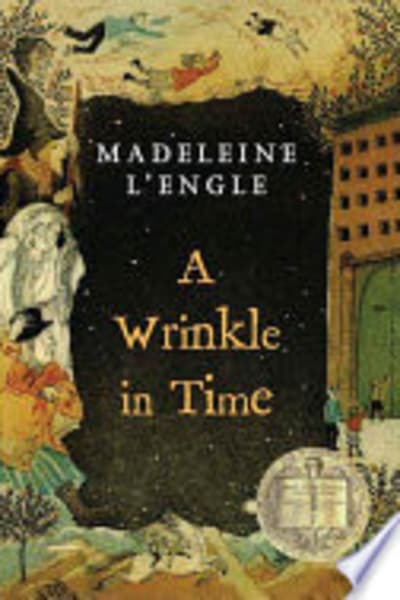
A Wrinkle in Time begins with the mysterious disappearance of Meg and Charles Wallace's father, who was working on the concept of a tesseract — a wrinkle in time and space. L'Engle's narrative masterfully intertwines elements of science fiction with a heartfelt tale of family and friendship. Chapter titles like 'Mrs. Whatsit' and 'The Happy Medium' introduce us to a quirky cast of characters who aid the siblings on their journey across dimensions. While the book offers rich imagination and adventure, it doesn't dive deeply into the scientific aspects of time travel, which could leave hard science enthusiasts wanting more. Still, L'Engle's exploration of love and courage makes it a poignant read for young and old alike.
Key Takeaways from A Wrinkle in Time
-
1
The Tesseract: A scientific concept that acts as a shortcut through space-time, allowing characters to travel vast distances instantly.
-
2
Mrs. Who's Quotations: This character communicates through famous quotes, emphasizing the importance of wisdom from various cultures and times.
-
3
The Black Thing: A dark cloud representing evil and conformity, challenging the protagonists to fight for individuality and love.
-
4
Aunt Beast: An alien creature who provides comfort and healing, demonstrating kindness transcending physical appearances.
-
5
The Happy Medium: A clairvoyant who helps the characters see possible futures, highlighting the power of choice and perspective.
Who Should Read This
Someone who feels disconnected from their family and seeks a story about overcoming distance and misunderstanding. If you're a young reader fascinated by strange worlds and cosmic adventures, this book will resonate.
Who Shouldn't Read This
If you're expecting rigorous scientific explanations or a purely science fiction narrative, this book may disappoint. Readers who prefer a straightforward plot without fantastical elements may find the whimsical storytelling frustrating.
Editor's Verdict
The best part of A Wrinkle in Time is its imaginative universe, particularly the concept of the tesseract. However, the book lacks detailed scientific explanations that might interest those curious about the mechanics of time travel. If you're a young reader or someone in need of a hopeful tale during challenging times, this book will offer a comforting escape.
Ready to read A Wrinkle in Time?
Get your copy on Amazon today.
A Wrinkle in Time — Frequently Asked Questions
About Madeleine L'Engle
Madeleine L'Engle (1918-2007) was an American author best known for her young adult science fiction novel "A Wrinkle in Time," published in 1962. She studied English at Smith College, which laid the foundation for her literary career. L'Engle's credibility in writing science fiction and fantasy stems from her ability to weave complex scientific concepts with imaginative storytelling. Other notable works include "A Wind in the Door" and "A Swiftly Tilting Planet," both part of the Time Quintet series.